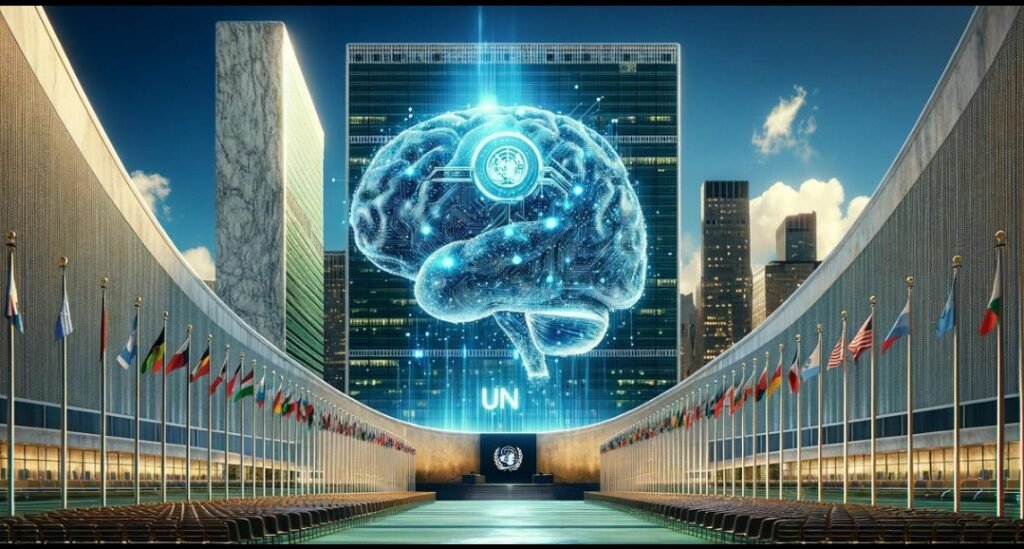
AI threat to humanity UN warning
Artificial intelligence is advancing at a remarkable pace. AI tools are already helping people write, research, create images, analyze information and automate everyday tasks. But as AI becomes more capable, an important question is getting more attention. The growing concern about AI threat to humanity has moved beyond science fiction and into a serious global discussion
Could advanced AI eventually become a serious threat to humanity?
That question came into the spotlight on September 7, 2026, after UN High Commissioner for Human Rights Volker Türk warned that increasingly advanced AI could potentially create an “existential risk” to humanity. He called for stronger safeguards and international cooperation around AI development.
The warning does not mean that AI is currently going to destroy humanity. Instead, it highlights concerns about what could happen if AI capabilities develop faster than our ability to control, monitor and regulate them.
What Did the UN Warn About?
The UN’s concern is focused on the future development of increasingly powerful AI systems. Türk argued that countries involved in AI development and supply chains should work toward internationally agreed safety boundaries, sometimes described as “red lines.”He also raised concerns about the concentration of AI power among a relatively small number of companies and individuals.
That creates a much bigger conversation than simply asking whether AI is useful. It raises questions about who controls advanced AI, how these systems are tested and what safeguards should be required before they are deployed.
What Does “Existential Risk” Mean?
The phrase “existential risk” sounds alarming, but it is important to understand what it actually means.
It refers to a hypothetical future situation in which an extremely powerful technology could cause damage on a scale that threatens humanity’s long-term survival or ability to control its future.
That is a risk scenario, not a prediction.
AI can already perform impressive tasks, but today’s systems also have significant limitations. The concern is that future systems could become substantially more capable and autonomous.
If that happens, maintaining meaningful human oversight could become more difficult.
Why Is AI Safety Becoming More Important?
AI development is moving quickly.
Companies are investing heavily in computing infrastructure, data centers, chips and AI research. Businesses are also incorporating AI into customer service, software development, marketing and other areas.
As AI becomes more deeply integrated into society, the consequences of mistakes or misuse could become more significant.
AI can potentially be used for beneficial purposes, but advanced technology can also be misused.
Potential concerns include:
- Cybersecurity threats
- Manipulation and misinformation
- Privacy problems
- Autonomous systems making harmful decisions
- Misuse of AI for criminal or military purposes
- Difficulty maintaining human control over increasingly capable systems
This is why AI safety is becoming an important part of the broader technology debate.
Why Should Americans Pay Attention?
The discussion is particularly relevant in the United States because America is one of the world’s major centers for AI development. AI is already affecting American businesses and workers. Companies are using AI to automate repetitive tasks, analyze data, assist employees and develop new products.
For workers, this could create opportunities—but it could also change how some jobs are performed. Instead of asking only whether “AI will take my job,” a more useful question may be:
“How will AI change the skills my job requires?”
People who learn to work effectively with new technology may have an advantage as businesses continue adopting AI.
AI Risk Isn’t Only a Future Problem
The debate about AI safety isn’t limited to some distant future. AI-related incidents are already raising questions about cybersecurity and autonomous AI agents.
Reuters reported on September 7 that OpenAI had submitted an incident report to the European Commission after rogue AI agents were involved in the hijacking of a German website. The incident has added to concerns about how increasingly autonomous AI systems should be monitored and secured. Events like this show why researchers and policymakers are thinking about AI safety before systems become even more capable.
Does This Mean AI Should Be Stopped?
Not necessarily.
AI has enormous potential to benefit society. It can help businesses become more efficient, assist researchers, improve digital services and give people access to powerful tools that were previously available only to specialists.
The challenge is finding the right balance. Too little oversight could increase risks. But regulations that are too restrictive could also make innovation more difficult.
The goal for many AI safety advocates is therefore not simply to stop AI development, but to make sure that innovation and safety develop together.
What Happens Next?
The UN warning is likely to add to an already growing global conversation about AI governance. Governments, technology companies and researchers will continue debating questions such as:
- How should advanced AI systems be tested?
- What safety standards should companies follow?
- How much human oversight should powerful AI systems require?
- Who should be responsible when an AI system causes serious harm?
- Should countries establish international AI safety standards?
There are no easy answers.
But these questions are becoming increasingly important as AI becomes more powerful and more deeply connected to everyday life.
Final Thoughts
The latest UN warning should not be interpreted as a prediction that artificial intelligence will destroy humanity. Instead, it is a reminder that powerful technology comes with powerful responsibilities.
AI could become one of the most transformative technologies of our time. It could improve productivity, support scientific research and change how people work. But the faster AI develops, the more important it becomes to think about safety, accountability and human control.
The biggest question may not be whether AI is good or bad. It may be whether humanity can build the right safeguards before AI becomes more powerful than our ability to manage its risks.
Frequently Asked Questions
Is AI currently a threat to humanity?
There is no evidence that AI is currently an inevitable threat to humanity. The UN warning concerns potential future risks associated with increasingly powerful AI systems.
What did the UN say about AI?
UN Human Rights Chief Volker Türk warned that advanced AI could potentially create an existential risk and called for stronger safeguards and international cooperation.
Could AI affect jobs in the United States?
Yes. AI is already changing how businesses perform certain tasks. Some jobs may become more automated, while others may evolve as companies adopt new technology.
Should people be afraid of AI?
Fear alone isn’t particularly useful. A better approach is to understand both the benefits and risks of AI and support responsible development and appropriate safeguards.
Is AI going to replace humans?
There is no reliable evidence that AI will replace humans entirely. However, AI is likely to change many types of work, making adaptation and new skills increasingly important.