Gas prices are rising in the US again, putting additional pressure on millions of American drivers. Higher crude oil prices, global supply disruptions, refinery problems, and declining fuel inventories are all contributing to increased prices at the pump.So, why are gas prices rising in the US, and what could happen next?
In this article, we explore the 7 major reasons behind rising gasoline prices and what Americans need to know.
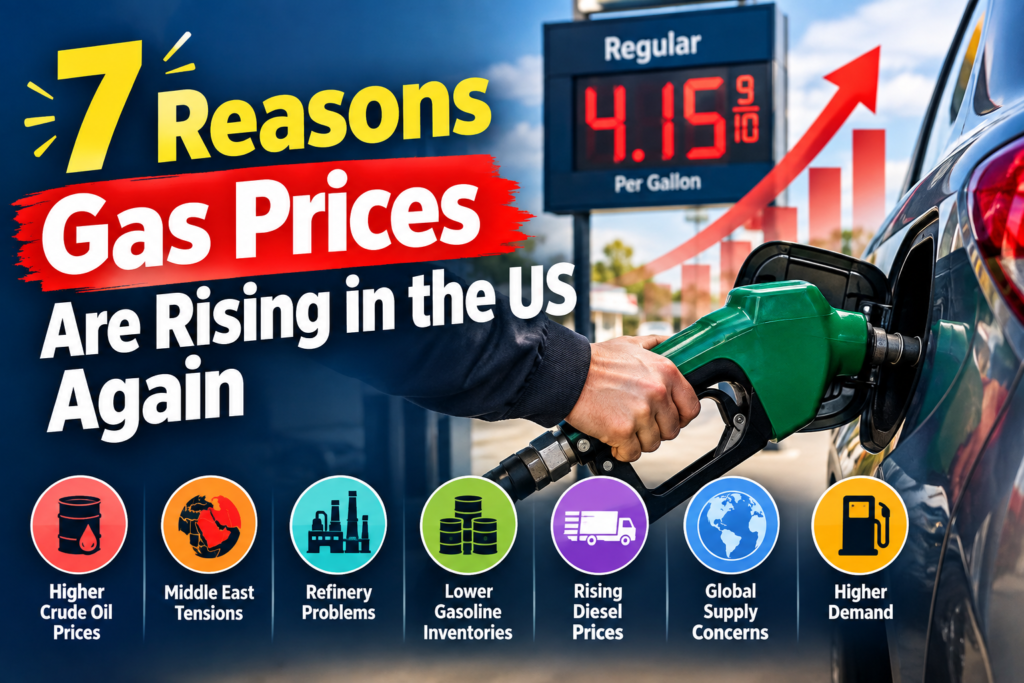
GAS PRICE RISING
Gas prices are rising in the US again, creating fresh concerns for millions of American drivers. After gasoline prices reached record levels over the 2026 Labor Day weekend, prices at the pump have remained high as crude oil costs increase and global fuel supplies face growing pressure.
The national average price of gasoline climbed to approximately $4.14–$4.15 per gallon during Labor Day weekend, surpassing the previous Labor Day record of $3.82 per gallon set in 2012.
So, why are gas prices rising in the US again? The answer involves several factors, including rising crude oil prices, Middle East supply disruptions, refinery problems, and declining gasoline inventories.
Here are seven major reasons behind higher gas prices in America and what drivers could expect in the coming months.
Table of Contents
- Why Are Gas Prices Rising in the US?
- Crude Oil Prices Are Rising
- Middle East Conflict Is Disrupting Oil Supplies
- Refinery Problems Are Adding Pressure
- US Gasoline Inventories Have Fallen
- Diesel Prices Are Also Rising
- Global Fuel Supply Concerns Continue
- Will Gas Prices Go Down Soon?
- What Can Americans Do About Higher Gas Prices?
- Final Thoughts
There is no single reason why gas prices are rising in the US. Instead, several economic and global factors are putting pressure on fuel prices at the same time.
The biggest factor is the rising cost of crude oil, which is the main raw material used to produce gasoline. When oil prices increase, gasoline production becomes more expensive, and those higher costs can eventually be passed on to consumers.
At the same time, geopolitical tensions in the Middle East, refinery disruptions, tighter fuel supplies, and falling gasoline inventories are contributing to higher prices at American gas stations.
Let’s look at the major reasons in more detail.
1. Crude Oil Prices Are Rising
One of the main reasons gas prices are rising in the US is the recent increase in crude oil prices.
On September 8, Brent crude was trading at around $97.70 per barrel, while US West Texas Intermediate (WTI) crude reached approximately $92.69 per barrel. Both major oil benchmarks were trading near their highest levels in recent weeks.
Why Do Crude Oil Prices Affect Gas Prices?
Crude oil is the primary ingredient used to make gasoline, diesel, and other petroleum products.
When crude oil becomes more expensive, refineries must pay more to produce gasoline. As a result, higher oil prices can eventually lead to higher prices at gas stations.
This is why American drivers may see gasoline prices increase even when local demand has not changed significantly.
Simply put:
Higher crude oil prices → Higher refining costs → Higher prices at the gas pump
Because crude oil represents a major portion of the final price consumers pay for gasoline, even relatively small changes in global oil prices can affect American drivers.
2. Middle East Conflict Is Disrupting Oil Supplies
Another major reason behind rising gas prices in the US is the ongoing geopolitical conflict affecting oil-producing regions in the Middle East.
The Middle East plays a critical role in the global energy market, and any disruption to oil production or transportation can quickly push crude oil prices higher.
Why Is the Strait of Hormuz So Important?
The Strait of Hormuz is one of the world’s most important oil transportation routes. A significant amount of global crude oil normally passes through this strategic waterway.
Recent disruptions and growing concerns about oil shipments have raised fears about potential supply shortages.
When global oil supplies become uncertain, traders often react by pushing crude oil prices higher.
How Does This Affect American Drivers?
Although the United States produces a large amount of crude oil domestically, oil is traded in a global market.
This means a supply disruption thousands of miles away can still affect the price Americans pay for gasoline.
If global crude oil supplies decline, international oil prices can rise—and those higher prices may eventually reach US consumers at the gas pump.
3. Refinery Problems Are Adding Pressure
Crude oil cannot be used directly as gasoline. It must first be processed at refineries.
Recent refinery disruptions in different parts of the world have made supplies of finished fuels, including gasoline and diesel, tighter.
Why Do Refinery Problems Increase Gas Prices?
Even if there is enough crude oil available, gasoline prices can still rise when refineries cannot produce enough finished fuel.
Refinery outages, maintenance issues, technical problems, and unexpected disruptions can reduce gasoline production.
When gasoline supplies become tighter while demand remains strong, prices usually increase.
This creates another layer of pressure on American fuel prices.
Less refinery production → Lower gasoline supply → Higher prices
Refinery capacity becomes especially important during periods of high demand or when multiple facilities experience disruptions at the same time.
4. US Gasoline Inventories Have Fallen
Another important reason gas prices are rising in the US is the decline in available gasoline inventories.
Gasoline inventories act as a buffer between fuel production and consumer demand. When inventories are high, the market has more flexibility to handle supply disruptions.
However, when inventories fall, the market becomes more vulnerable.
Why Do Lower Gasoline Inventories Matter?
Lower gasoline inventories mean there is less fuel available to absorb unexpected disruptions.
For example, if a refinery experiences an outage or demand suddenly increases, limited inventories can cause prices to rise more quickly.
Tighter gasoline supplies can therefore increase pressure on prices at the pump, particularly in regions that depend heavily on specific refineries or fuel distribution networks.
5. Diesel Prices Are Also Rising
Gasoline is not the only fuel becoming more expensive.
Diesel prices have also increased significantly, adding pressure across the broader economy.
Diesel is essential for:
- Truck transportation
- Shipping and logistics
- Agriculture
- Construction
- Industrial operations
When diesel prices rise, transportation costs can increase as well.
Those higher transportation costs may eventually affect the prices consumers pay for groceries, household products, and other goods.
This means rising fuel prices can have an impact beyond the cost of filling up a car.
6. Global Fuel Supplies Are Under Pressure
Global fuel markets are closely connected.
Problems in one major oil-producing or refining region can affect fuel prices around the world.
Supply disruptions involving crude oil, refineries, shipping routes, or major energy-producing countries can all contribute to higher prices.
At the moment, concerns about global supply shortages are making energy markets more sensitive to new developments.
As long as uncertainty remains high, crude oil and gasoline prices could continue to experience significant fluctuations.
7. Seasonal and Market Demand Can Also Affect Prices
Fuel prices are also influenced by changes in consumer demand.
During busy travel periods, Americans use more gasoline, which can increase pressure on supplies.
In addition, changes in refinery operations and seasonal fuel requirements can affect how much gasoline is available in the market.
When strong demand combines with lower inventories and supply disruptions, gas prices can rise quickly.
This combination of factors is one reason why the current increase in US gasoline prices has attracted so much attention.
Will Gas Prices Go Down Soon?
Whether gas prices will fall depends largely on what happens to crude oil prices and global fuel supplies.
Prices could begin to decline if:
- Crude oil prices fall
- Middle East supply disruptions ease
- Oil shipments return to normal
- Refineries increase fuel production
- US gasoline inventories recover
However, prices could remain elevated—or increase further—if additional supply disruptions occur.
The biggest factor to watch is the price of crude oil. Since oil is the main raw material used to produce gasoline, changes in crude prices often have a direct impact on what consumers eventually pay at the pump.
What Can Americans Do About Higher Gas Prices?
Although consumers cannot control global oil prices, there are several ways drivers can reduce the impact of higher gasoline costs.
1. Compare Gas Prices
Gas prices can vary significantly between nearby gas stations. Using fuel price comparison apps may help drivers find cheaper options.
2. Avoid Aggressive Driving
Rapid acceleration and excessive speeding can reduce fuel efficiency and increase gasoline consumption.
3. Keep Tires Properly Inflated
Properly inflated tires can help improve fuel efficiency and reduce unnecessary fuel use.
4. Combine Trips
Combining errands into one trip can reduce the number of miles driven and lower overall gasoline consumption.
5. Consider Fuel Rewards Programs
Some gas stations and retailers offer fuel rewards or discount programs that may help reduce the cost per gallon.
Final Thoughts
The latest increase in gas prices is being driven by several factors at the same time.
Rising crude oil prices, Middle East supply disruptions, refinery problems, falling gasoline inventories, and broader global fuel shortages are all contributing to higher prices at the pump.
For now, American drivers should continue watching crude oil prices and developments in global energy markets.
If oil supplies stabilize and refinery production improves, gasoline prices could eventually decline. However, continued geopolitical tensions or additional supply disruptions could keep gas prices elevated through the coming months.
As always, the situation can change quickly—but one thing is clear: global events continue to play a major role in determining how much Americans pay for gasoline.
“Can AI Help Predict Rising Gas Prices?”
AI-powered fuel apps can analyze nearby gas prices and help drivers identify cheaper stations. By comparing current prices and location data, these tools can help consumers save money when gas prices are rising.
please read this also -:UN Warns: AI Threat to Humanity – Life Like Canvas