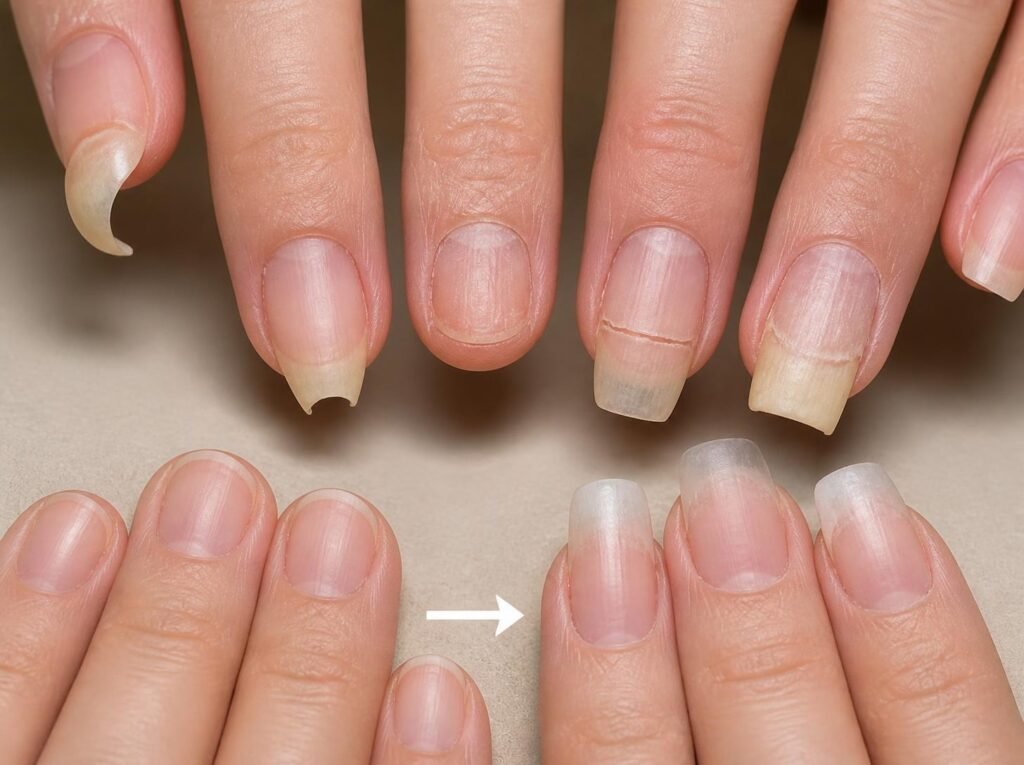
Not every client walks into a nail salon with naturally even, symmetrical nails. Some nails may grow downward, curve strongly, have weak sidewalls, or show damage from previous enhancements. These situations can make achieving a clean and balanced nail shape much more challenging.
For nail technicians, understanding problem nails is an important skill. The goal is not simply to file the nail into a different shape. A good correction approach considers the natural nail structure, the condition of the nail, the desired shape, and the appropriate enhancement technique.
In this guide, we’ll look at 7 common types of problem nails, why they can be difficult to work with, and practical correction tips for nail technicians.
Table of Contents
- What Are Problem Nails?
- 7 Common Types of Problem Nails
- Why Filing Alone Doesn’t Always Fix Problem Nails
- What Is Nail Reconstruction?
- When Advanced Training Can Help
- Problem Nails Masterclass for Nail Technicians
- Who Can Benefit From Problem-Nail Training?
- Frequently Asked Questions
- Final Thoughts
What Are Problem Nails?
Problem nails are nails whose natural shape, condition, growth direction, or previous enhancement makes standard nail preparation and shaping more difficult.
Some common examples include:
- Hooked nails
- Strongly curved nails
- Downward-growing nails
- Weak or missing sidewalls
- Cracked or structurally damaged nails
- Nails that need significant shape correction
- Poorly built or inherited nail extensions
The important point is that every difficult nail should be assessed individually. A technique that works beautifully on one client may not be appropriate for another.
If you also love experimenting with different nail shapes and designs, check out our guide to Nail Art Trends 2026 for more inspiration.
Affiliate Disclosure: This article contains affiliate links. If you purchase a course or product through these links, I may earn a small commission at no extra cost to you. I only recommend resources that may be useful for our readers.
7 Common Types of Problem Nails
1. Hooked Nails
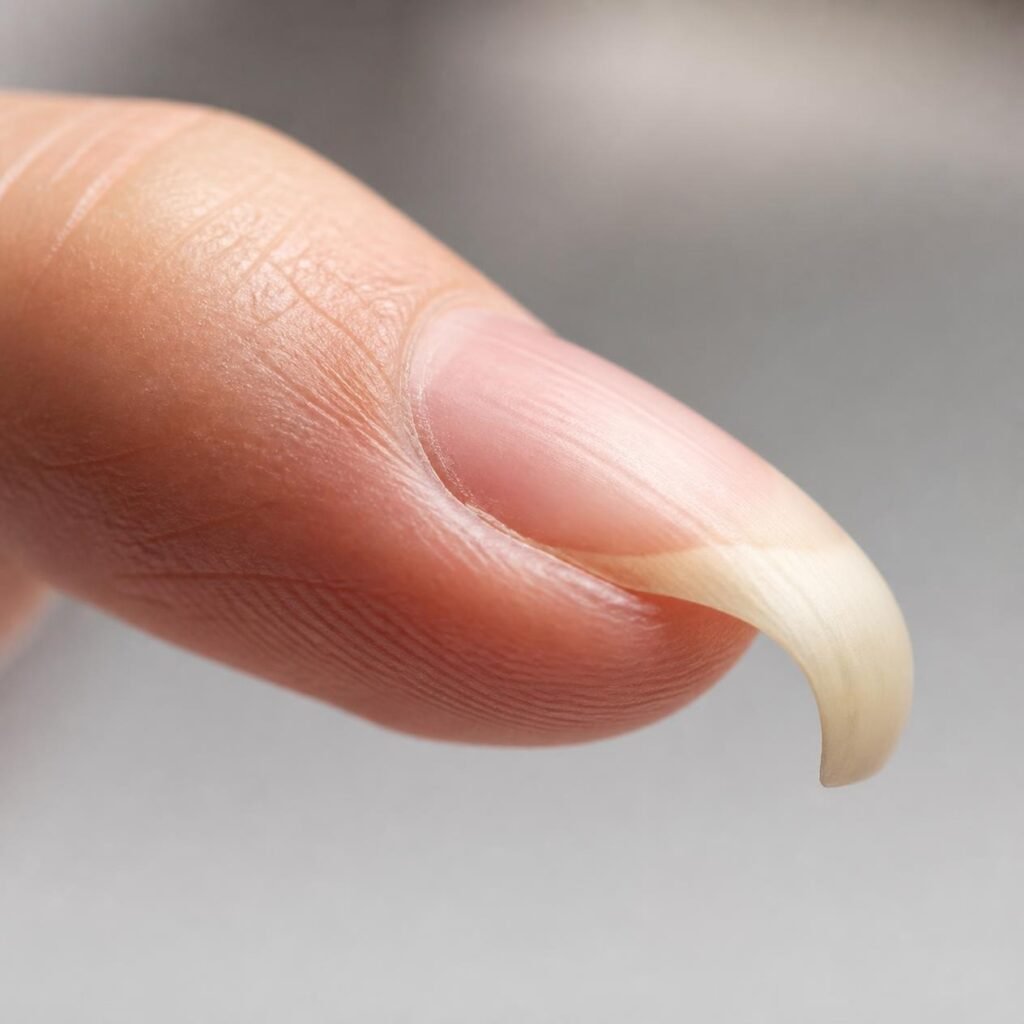
Hooked nails tend to curve downward toward the free edge. This can make the nail appear shorter or more downward-pointing than the client wants.
Why are hooked nails difficult?
If the technician simply adds length without considering the existing structure, the finished enhancement may continue to look downward-facing.
Correction tips
A technician should first examine the natural nail from different angles and determine how much correction is realistically possible.
Important considerations include:
- Assessing the natural growth direction
- Creating a balanced structure
- Avoiding unnecessary thickness
- Checking the side profile during the service
- Filing carefully rather than aggressively
The goal is to create a more balanced appearance while respecting the natural nail.
2. Curved or Downward-Growing Nails
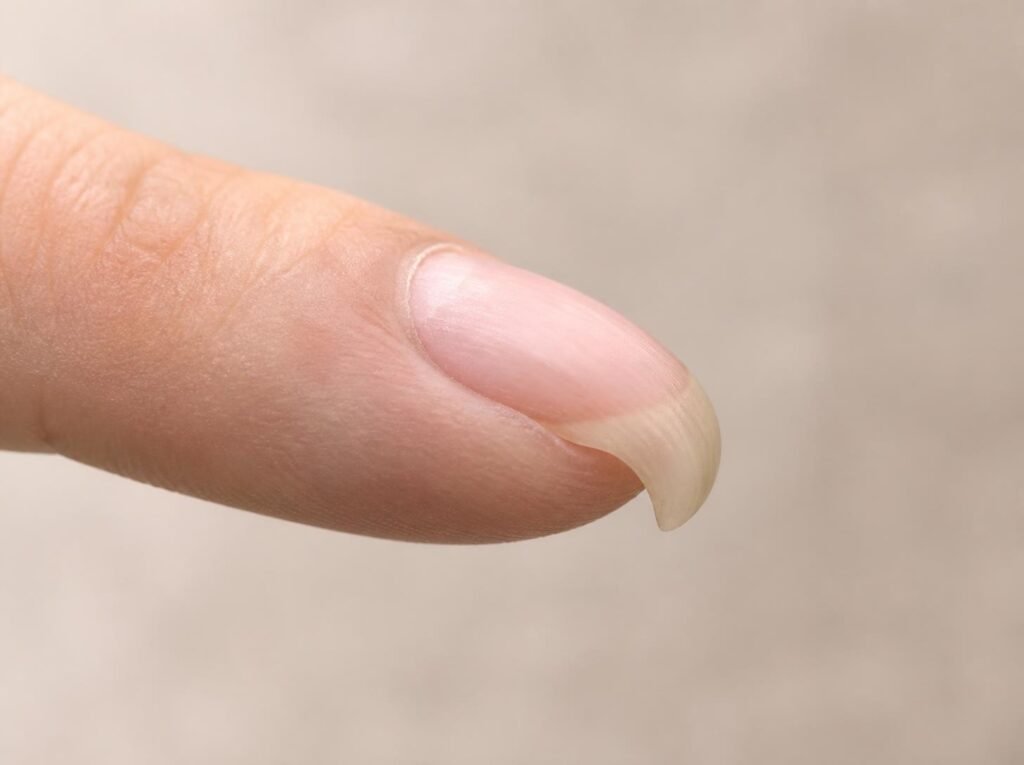
Some nails have a pronounced curve or grow downward. This can make it challenging to create a symmetrical extension.
Common challenges
A strongly curved nail may cause:
- Uneven-looking extensions
- Difficulty creating consistent length
- An unbalanced side profile
- Problems maintaining the desired shape
Correction approach
Instead of trying to force the natural nail into a completely different form, the technician should work with the existing structure and carefully build the enhancement around it.
Tip: Check the nail from the front, side, and top before final filing. Looking at only one angle can make an apparently straight nail look uneven from another angle.
3. Weak or Missing Sidewalls
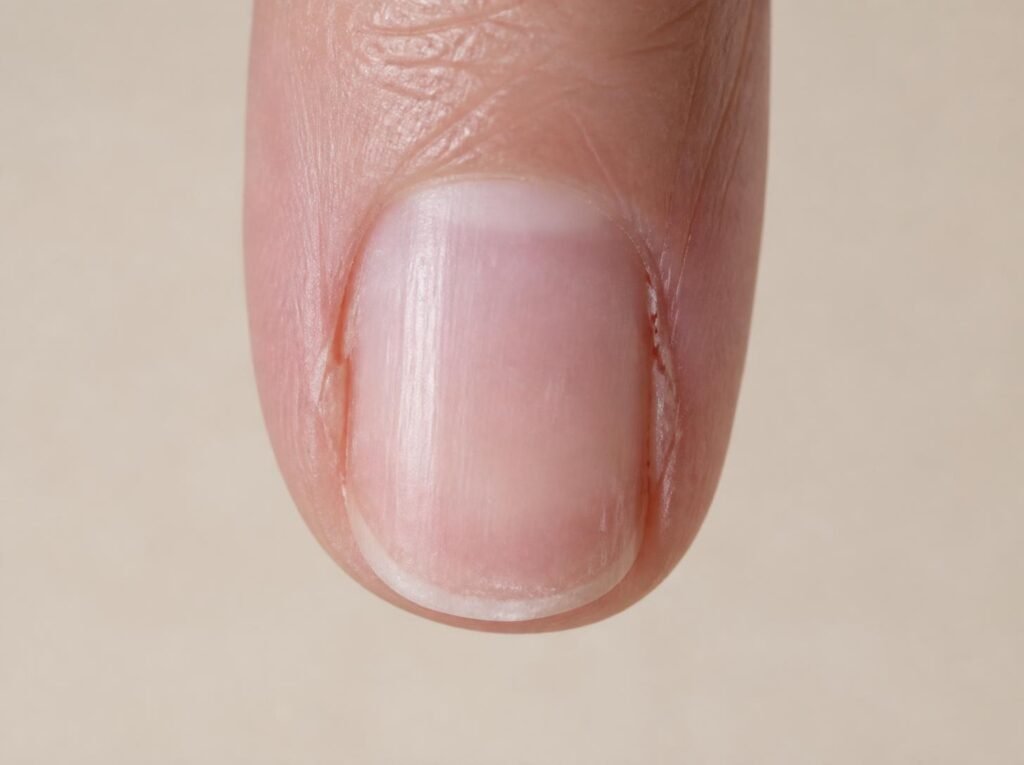
Sidewalls are important for creating a strong and balanced nail shape. When they are weak, uneven, or partially missing, achieving a crisp shape can become difficult.
This is particularly noticeable when creating square or long extensions.
What can happen?
Without adequate structure, the finished nail may look:
- Too narrow
- Uneven
- Lopsided
- Weak at the corners
- Different from one finger to another
Correction tips
A technician may need to carefully rebuild the visual structure of the nail rather than relying entirely on filing.
The product should be placed and shaped with attention to symmetry and overall balance.
Remember: More product does not automatically mean more strength. Correct placement and structure are essential.
4. Cracked or Structurally Damaged Nails
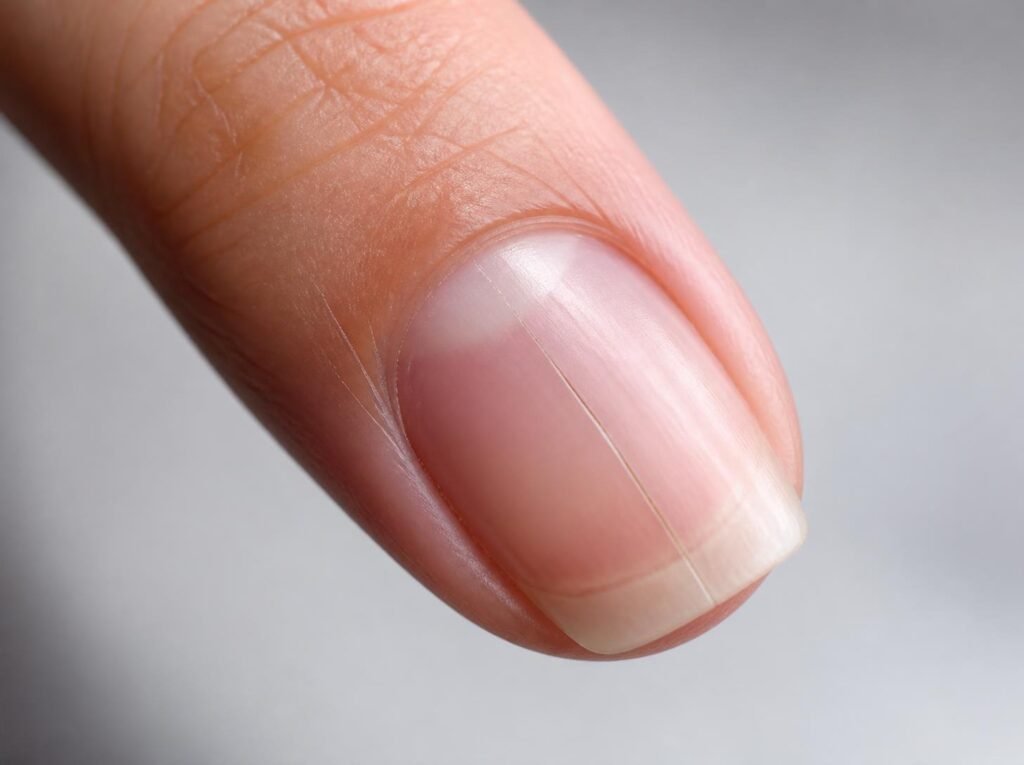
Cracks require special attention because the technician must determine whether the nail can safely receive an enhancement.
A visible crack is not simply a shaping problem.
Before working on a cracked nail
Check:
- Where the crack is located
- Whether it is superficial or deeper
- Whether the area is painful
- Whether there is bleeding or other injury
- Whether the nail is detached from the nail bed
If there is significant pain, bleeding, suspected infection, or an injury involving the nail bed, cosmetic enhancement should not be used as a substitute for appropriate medical care.
Professional approach
Depending on the situation, the appropriate choice may be to:
- Protect the area
- Reduce unnecessary stress on the nail
- Wait for healthy growth
- Repair only when appropriate
- Avoid enhancement when the nail is unsuitable
A professional technician should know when not to perform a service.
5. Long Square Nails With Structural Problems
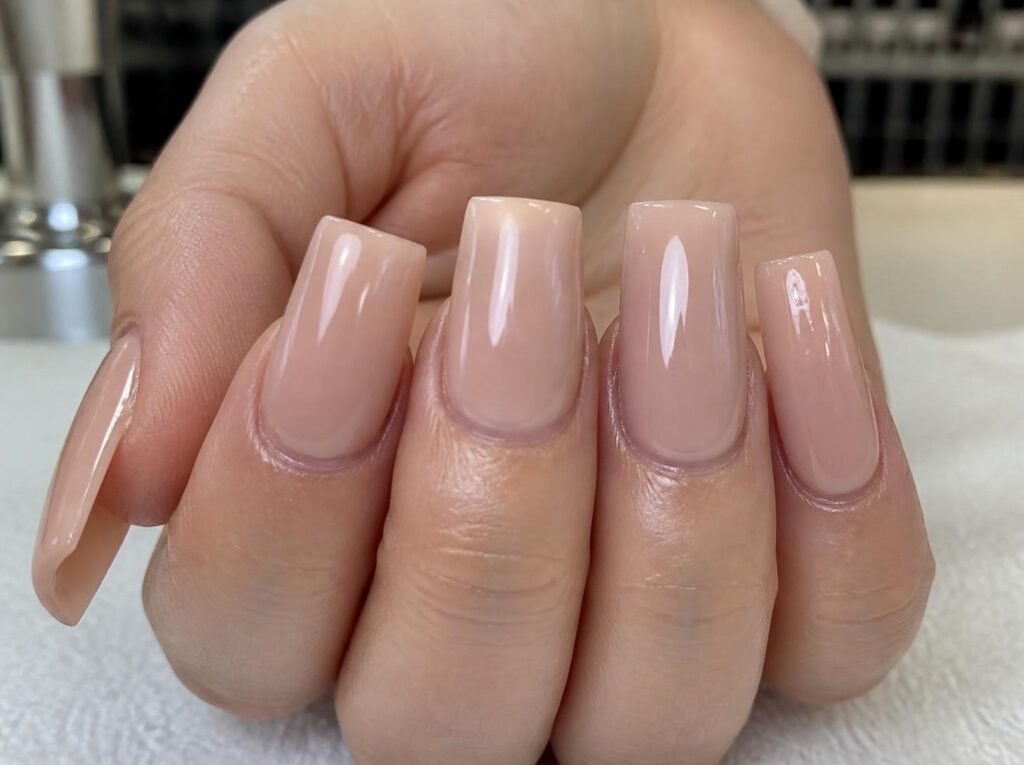
Long square nails can look beautiful, but they require good structure.
When the natural nail or an existing extension lacks proper balance, long square nails can become especially challenging.
Common problems
You may notice:
- Uneven corners
- Different lengths
- Weak stress areas
- Excessive thickness
- Crooked sidewalls
- An unbalanced apex
Correction tips
Start by assessing the complete structure instead of focusing only on the free edge.
Pay attention to:
- Overall length
- Sidewalls
- Apex placement
- Stress area
- Free-edge symmetry
- Final filing
For long nails, structure becomes increasingly important because additional length creates additional leverage.
6. Oval or Round Nails That Need a Square Shape
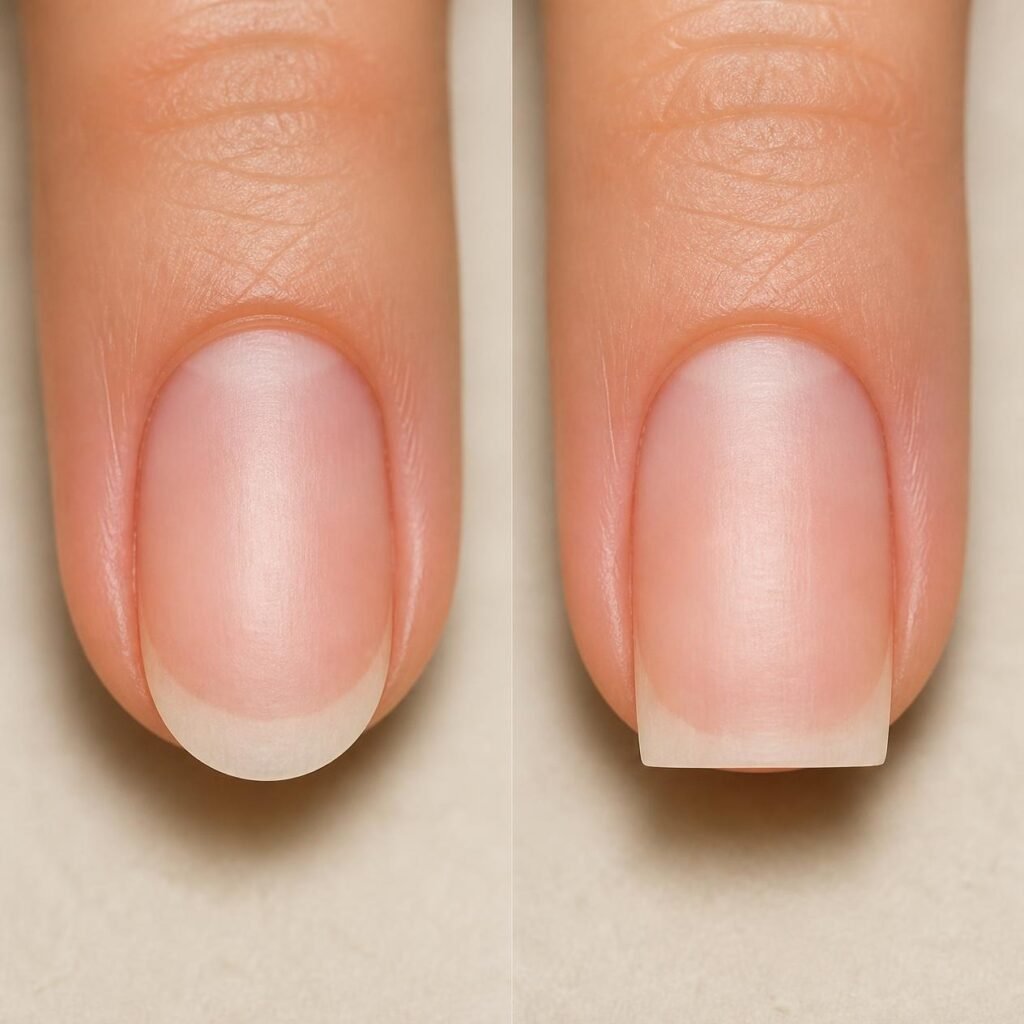
Changing an existing rounded appearance into a sharper square shape can be more difficult than it looks.
The technician may have to create the visual impression of corners even when the natural nail does not naturally provide strong corners.
The challenge
Simply filing the sides straight can make the nail too narrow or weaken the structure.
Better approach
Consider the nail’s existing width, sidewalls, and length before deciding how much transformation is possible.
The final shape should look balanced rather than artificially forced.
Pro tip: Compare all five nails on the same hand during the service. Consistency is just as important as the shape of an individual nail.
7. Poorly Built or Inherited Nail Extensions
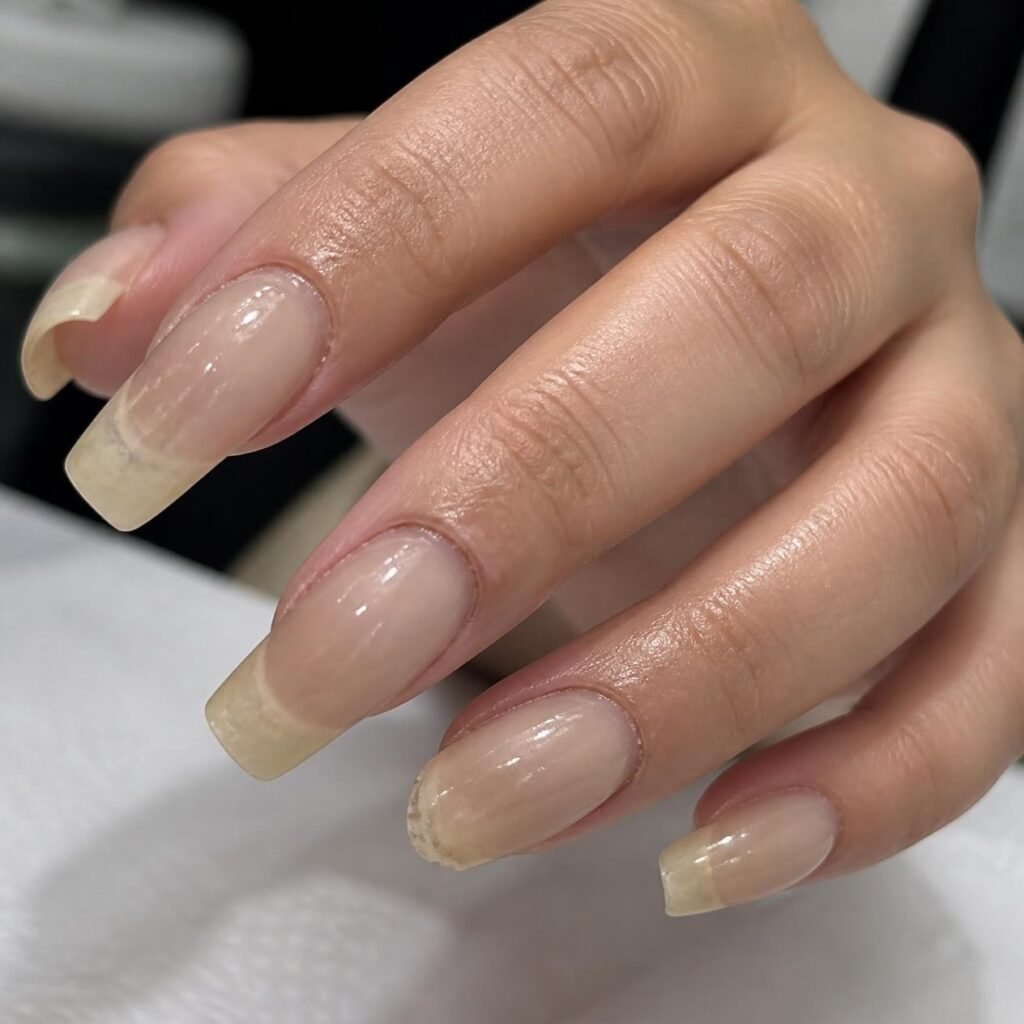
Sometimes a client arrives with extensions created by another technician.
The existing set may have:
- Incorrect thickness
- Poor apex placement
- Uneven lengths
- Crooked sidewalls
- Excess product
- Damaged corners
- Incorrect shape
In these situations, completely removing everything is not always the only consideration. The technician should first assess the existing enhancement and the condition of the natural nail.
What should you check?
Look at:
- Natural nail condition
- Product adhesion
- Lifting
- Thickness
- Structure
- Shape
- Cracks or damage
If the existing enhancement is unsuitable or unsafe, removal and a fresh application may be more appropriate.
👉 [Explore the Problem Nails Masterclass]
Affiliate Disclosure: This is an affiliate link. If you purchase through this link, I may earn a commission at no additional cost to you.
Why Filing Alone Doesn’t Always Fix Problem Nails
One of the biggest mistakes when working with problem nails is assuming that every structural issue can be corrected with filing.
Filing can change the surface and shape, but it cannot magically create missing structure.
For difficult nails, the technician may need to consider:
- Product placement
- Structure
- Apex
- Sidewalls
- Stress areas
- Nail length
- Overall symmetry
The key is to understand where the problem originates before deciding how to correct it.
What Is Nail Reconstruction?
Nail reconstruction is an advanced approach used when a nail requires more than basic shaping.
Depending on the situation and the technician’s training, reconstruction techniques may involve carefully rebuilding the appearance and structure of a nail using an appropriate enhancement product.
For particularly challenging nails, techniques involving polygel reconstruction can be useful when the technician has the appropriate training, products, and tools.
However, reconstruction should never be treated as a one-size-fits-all solution. The natural nail must always be assessed first.
💅 Want to Master Problem Nails?
Difficult nail shapes can be challenging—even for experienced nail technicians.Learn advanced approaches to nail correction, reconstruction, shaping and filing with focused problem-nail training.
→ Explore the Problem Nails Masterclass
Affiliate Disclosure: This is an affiliate link. If you purchase through this link, I may receive a commission at no additional cost to you
Why Advanced Training Matters for Problem Nails
Basic nail training teaches essential skills such as:
- Preparation
- Product application
- Basic shaping
- Filing
- Gel leveling
- Safe e-file practices
But difficult clients can present situations that require more advanced decision-making.
A technician working with problem nails needs to understand not only how to perform a technique, but also:
Why is this nail behaving this way?
What needs to be corrected?
How much correction is realistic?
When should the service be avoided?
This type of understanding can help a nail technician become more confident when handling challenging clients.
Nail Technician Training
Basic nail technician training teaches essential skills such as preparation, product application, basic shaping, filing, gel leveling and safe e-file practices.
Affiliate Disclosure: This article contains affiliate links. If you purchase a course or product through these links, I may earn a small commission at no extra cost to you. I only recommend resources that may be useful for our readers.
Problem Nails Masterclass for Nail Technicians
If you are a nail technician who regularly encounters difficult nail shapes, advanced education can be worth considering.
One example is the Problem Nails Masterclass, which focuses specifically on advanced correction and reconstruction techniques.
The training covers practical situations involving difficult nail structures, including:
- Hooked and curved nails
- Downward-growing nails
- Missing sidewalls
- Cracks and structural problems
- Long square reconstruction
- Shape correction
- Inherited nail extensions
- Filing and refinement after reconstruction
The course uses real client-case demonstrations so technicians can see how different structural problems are approached in practice.
Important: This type of advanced training is more suitable for technicians who already have a solid foundation in nail enhancement techniques.
👉 Explore the Problem Nails Masterclass and other nail technician training options:
https://lifelikecanvas.com/nail-technician-training-skills-courses-tools/
Affiliate Disclosure: This is an affiliate link. If you purchase through this link, I may receive a commission at no additional cost to you.
Who Can Benefit From Advanced Problem-Nail Training?
Advanced problem-nail education may be useful for nail technicians who:
- Already perform professional nail services
- Want to improve their correction skills
- Frequently work with difficult nail shapes
- Want to improve their confidence with reconstruction
- Want to understand structural nail problems better
- Want to expand the services they can offer clients
- Want to improve their filing and shaping techniques
Beginners should first develop strong fundamentals before attempting advanced reconstruction techniques.
Frequently Asked Questions
What are problem nails?
Problem nails are nails whose natural shape, condition, growth direction, or previous enhancement makes normal nail preparation, shaping, or enhancement more challenging.
Can hooked nails be corrected?
Their appearance can sometimes be improved through appropriate enhancement and structural correction techniques. The result depends on the natural nail and the technician’s skill.
Can filing fix all problem nails?
No. Filing can change shape, but structural issues may require a different approach. Excessive filing can also weaken the natural nail.
Is polygel suitable for nail reconstruction?
Polygel can be used for certain reconstruction techniques when appropriate, but the correct product and technique depend on the nail’s condition and the desired result.
Should a cracked nail always receive an extension?
No. A cracked or injured nail should be assessed carefully. If there is significant damage, pain, bleeding, or suspected infection, cosmetic enhancement may not be appropriate.
Do nail technicians need advanced training for difficult nails?
Basic training is essential, but advanced education can help experienced technicians understand more complicated structural corrections and reconstruction techniques.
Want to Explore More Nail Technician Training?
Problem nails ke alawa, nail technicians apni skills ko nail art aur stamping techniques mein bhi improve kar sakte hain. If you enjoy creating detailed nail designs, a dedicated nail stamping course can help you learn more structured techniques and design ideas.
👉 Explore the Nail Stamping Course
Affiliate Disclosure: This is an affiliate link. If you purchase through this link, I may receive a commission at no additional cost to you
Final Thoughts
Working with problem nails requires more than simply knowing how to file a nail into a different shape.
The technician needs to understand the natural nail, identify the structural challenge, choose an appropriate technique, and know when correction is or isn’t suitable.
Whether you’re dealing with hooked nails, weak sidewalls, cracked nails, downward-growing nails, or poorly built extensions, careful assessment should always come before correction.
And if you are a nail technician looking to improve your skills, advanced education focused specifically on difficult nail structures can help you develop a more systematic approach to challenging services.
The goal isn’t just to make a nail look different. It’s to create a balanced, thoughtful result while respecting the natural nail.
More Nail Art Inspiration
Once you understand nail structure and shaping, you can explore creative designs for different occasions. If you’re looking for seasonal inspiration, check out our guide to Halloween Party Nail Art for spooky and stylish nail design ideas.
Affiliate Disclosure: This is an affiliate link. If you purchase through this link, I may receive a commission at no additional cost to you