Brittle Nails? 9 Easy Ways to Strengthen Weak Nails at Home
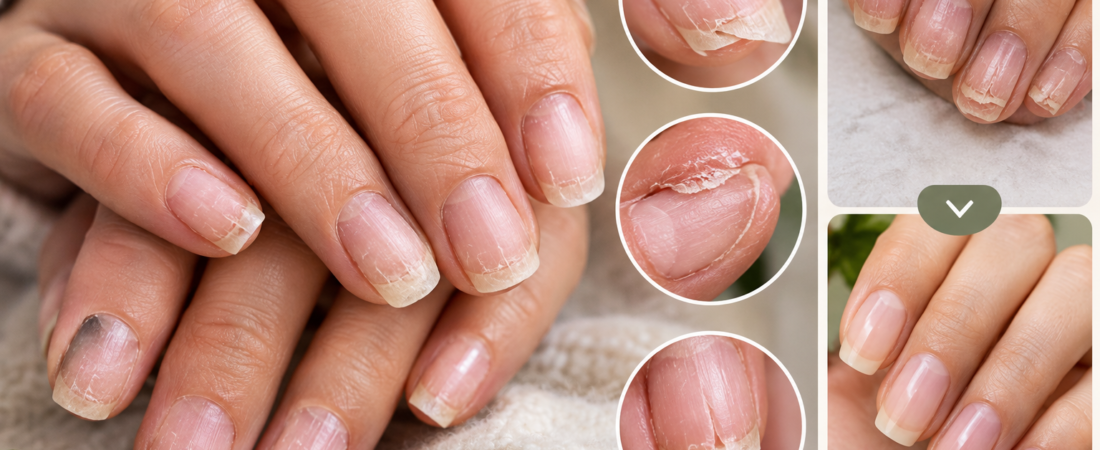
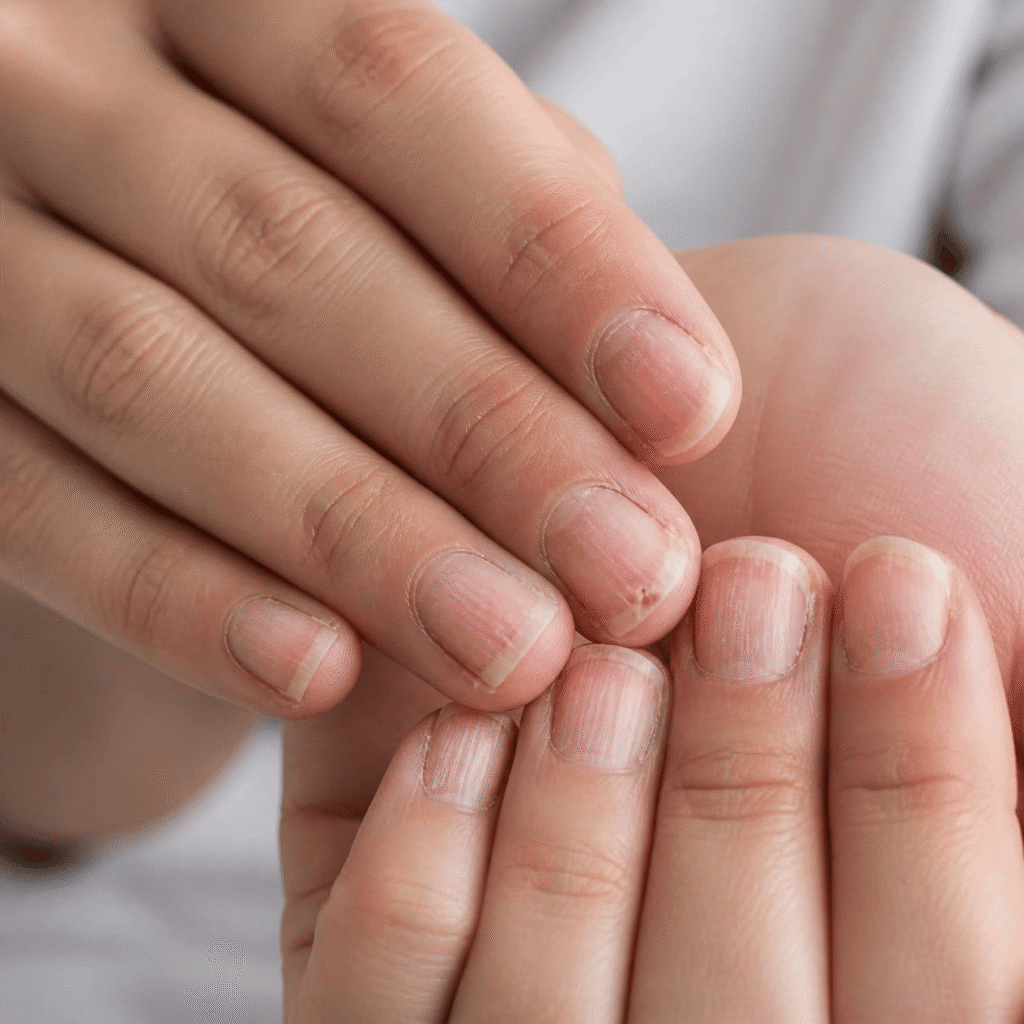
If your nails keep splitting, peeling, cracking, or breaking before they have a chance to grow, you’re not alone. Brittle nails are a common problem, especially if you regularly use gel polish, wash your hands frequently, use hand sanitizer, or expose your hands to cleaning products.
The good news is that you can improve your everyday nail-care routine with a few simple habits at home.
In this guide, you’ll learn 9 easy ways to strengthen weak nails at home, including moisturizing, protecting your nails from water and chemicals, taking breaks from gel manicures, and trying a simple overnight nail-care routine.
Quick note: Home nail care can help with dryness and everyday breakage, but persistent or unusual nail changes may need professional
evaluation.
What Causes Brittle Nails?
Before learning how to fix brittle nails, it helps to understand why they become weak in the first place.
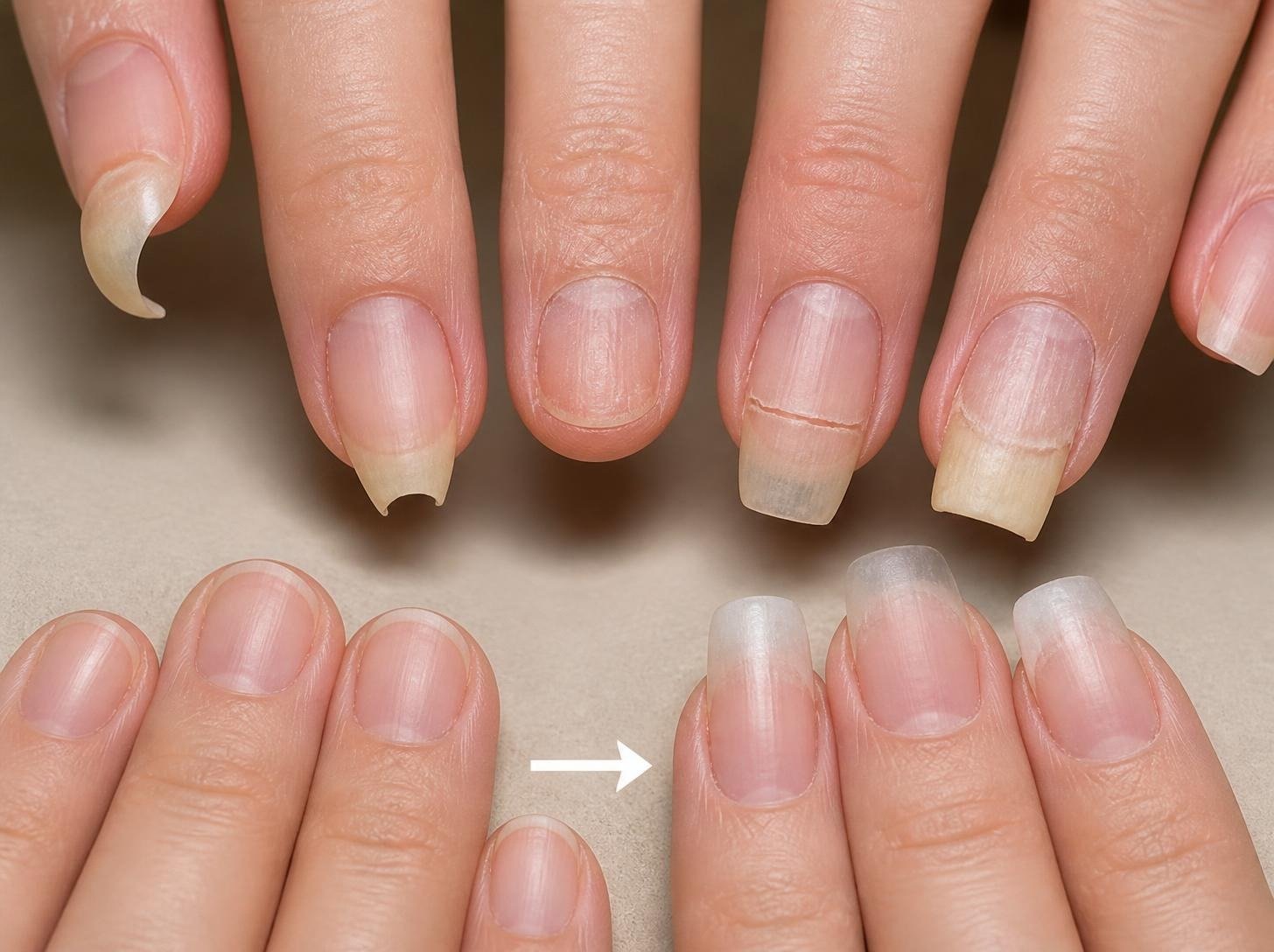
Several everyday habits can contribute to dry, brittle, or splitting nails. Frequent handwashing and sanitizing can remove moisture from the nails. Long nails can also be more likely to split or break, while repeated manicures and cosmetic treatments may contribute to nail damage.
Gel manicures can be particularly tough on nails. The American Academy of Dermatology notes that gel manicures can cause brittleness, peeling, and cracking, especially with repeated use.
Other common factors include:
Frequent exposure to water
Household cleaning products
Acetone-based polish removal
Picking or peeling nail polish
Biting your nails
Keeping nails very long
Dry cuticles and surrounding skin
Repeated gel or artificial nail treatments
9 Easy Ways to Strengthen Brittle Nails at Home
1. Moisturize Your Nails and Cuticles Every Day
One of the simplest ways to care for brittle nails is to keep your nails and cuticles moisturized.
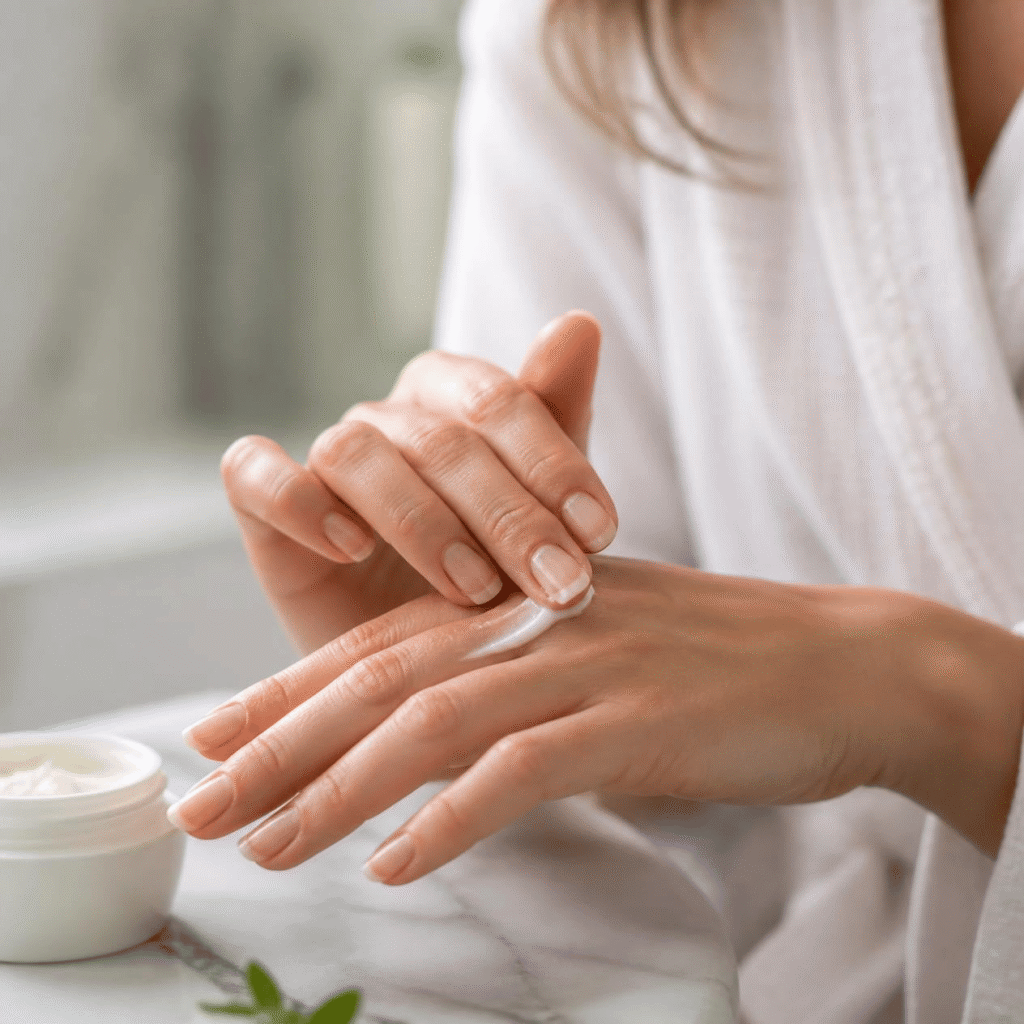
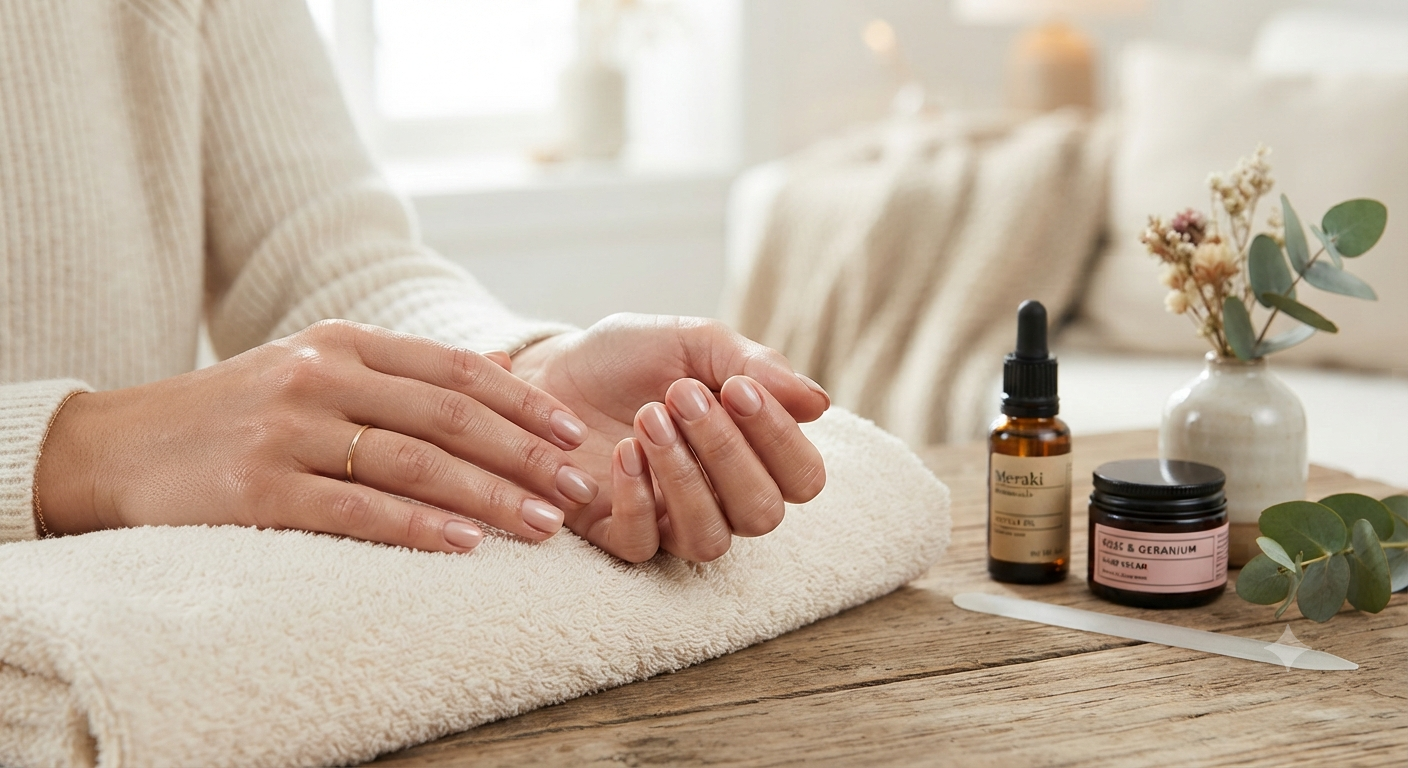
After washing your hands, apply a rich hand cream and gently massage some of it around your nails and cuticles. At night, you can use a thicker moisturizer or a small amount of petroleum jelly.
This is especially helpful if your hands are frequently exposed to water, soap, or hand sanitizer.
The American Academy of Dermatology recommends moisturizing nails and cuticles between manicures to help minimize brittleness and chipping.
Easy routine: Wash → dry gently → apply hand cream → massage around the nails and cuticles.
2. Try Nail Slugging Before Bed
If your nails feel extremely dry, try a simple nail slugging routine at night.
After applying hand cream or cuticle oil, apply a thin layer of petroleum jelly around the nails and cuticles. Leave it overnight and wash your hands in the morning.
The goal is simple: create a moisture-locking layer while you sleep.
Nail slugging has also been discussed as an at-home technique for very dry nails and cuticles. Cleveland Clinic describes it as an intensive moisturizing approach using petroleum jelly or a similar occlusive product.
You don’t need a lot of product. A small amount is enough.
3. Wear Gloves When Cleaning
Household cleaning can be surprisingly hard on your nails.
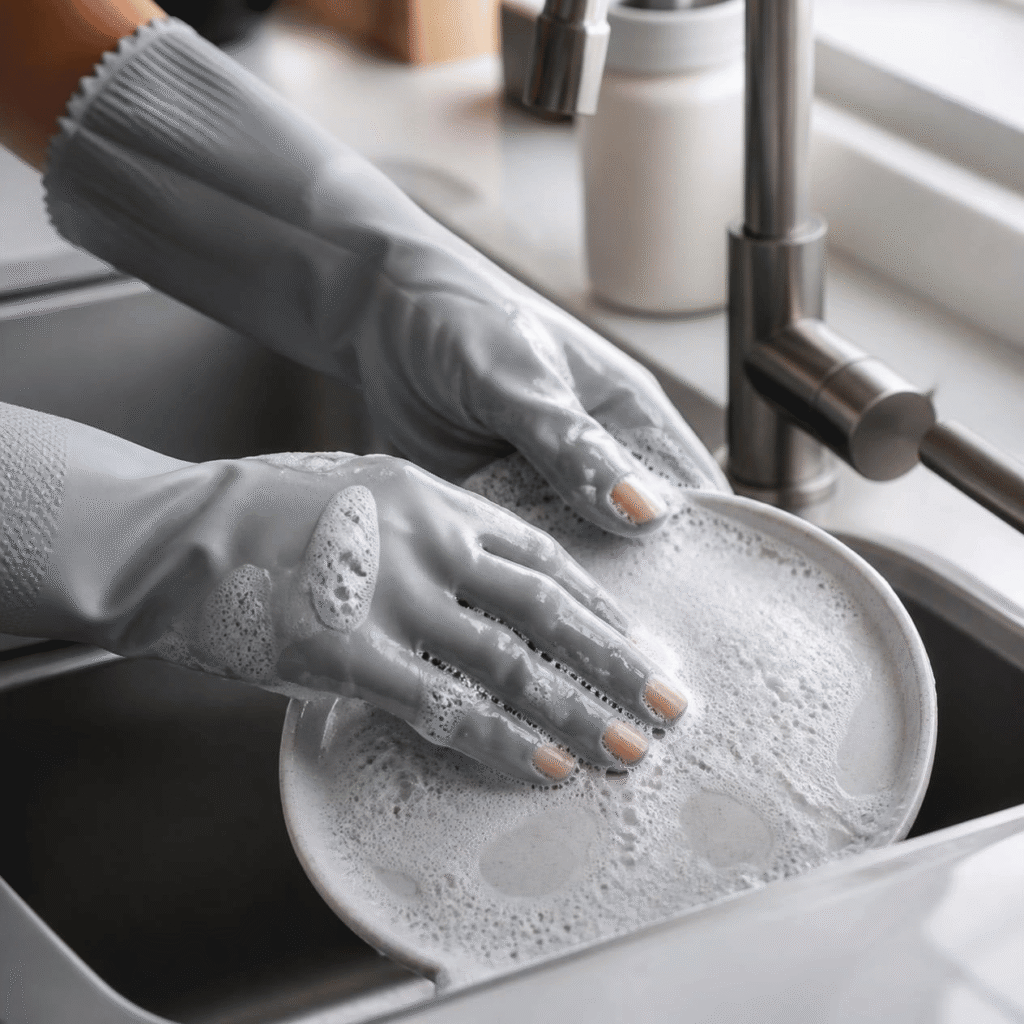
Repeated exposure to water and cleaning products can leave nails dry and more vulnerable to splitting. Wearing rubber or waterproof household gloves while washing dishes or cleaning can create a simple protective barrier.
This small habit is particularly useful if you notice that your nails become weaker during weeks when you’re doing more cleaning.
Tip:After removing your gloves, dry your hands and apply moisturizer to your hands, nails, and cuticles.
4. Keep Weak Nails Shorter for a While
If your nails are already splitting and breaking, growing them very long may make the problem worse.
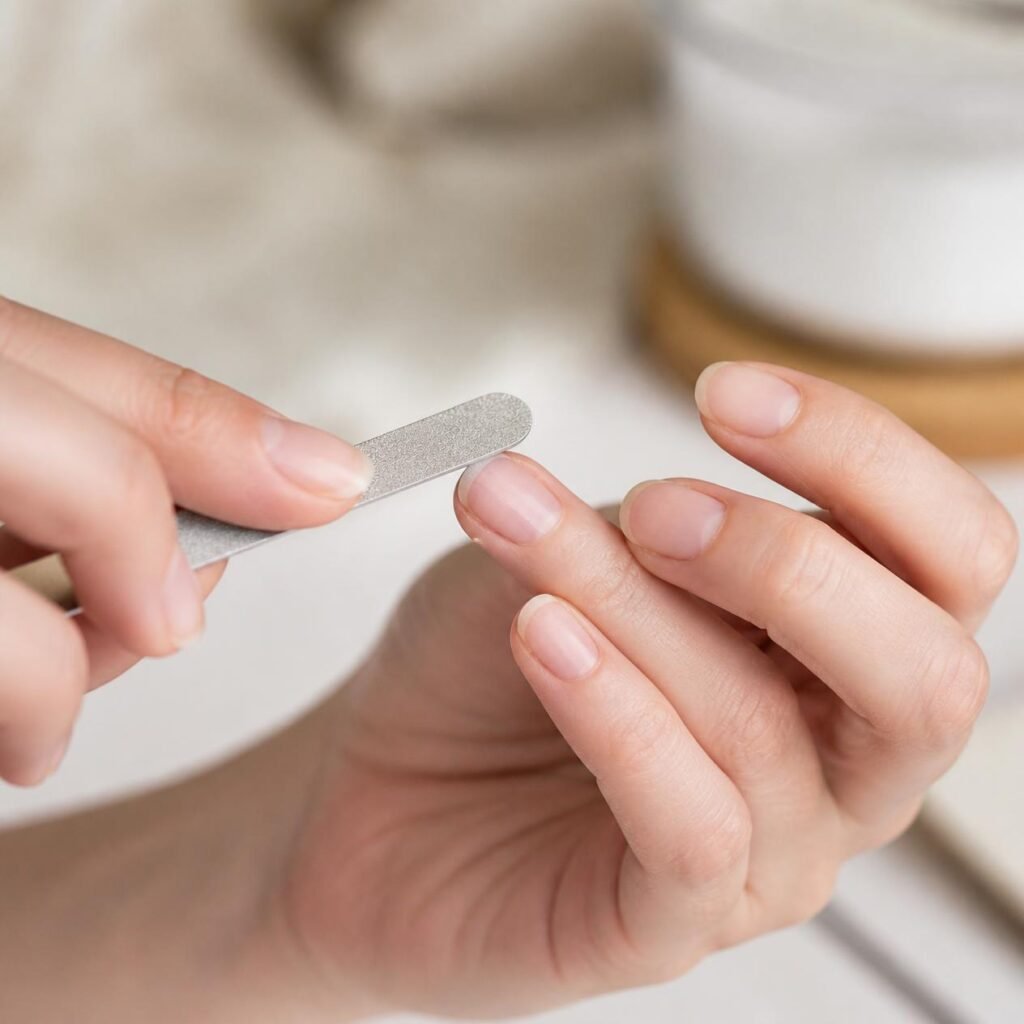
For a few weeks, keep your nails at a comfortable, practical length. File sharp edges gently so they don’t catch on clothing or other objects.
As your nails grow out, you can gradually return to your preferred length.
Keeping nails shorter can also reduce the temptation to use them as tools.
5. Take a Break From Gel Polish
Love gel manicures? You don’t necessarily have to give them up forever, but if your nails are currently thin, peeling, or breaking, consider giving them a break.
The American Academy of Dermatology recommends taking a nail-polish holiday between gel manicures and moisturizing the nails and cuticles during that time.
Most importantly, don’t peel or pick off gel polish when it starts lifting. Picking can damage the nail surface.
Give your natural nails some time without repeated gel applications while you focus on moisturizing and gentle care.
6. Stop Using Your Nails as Tools
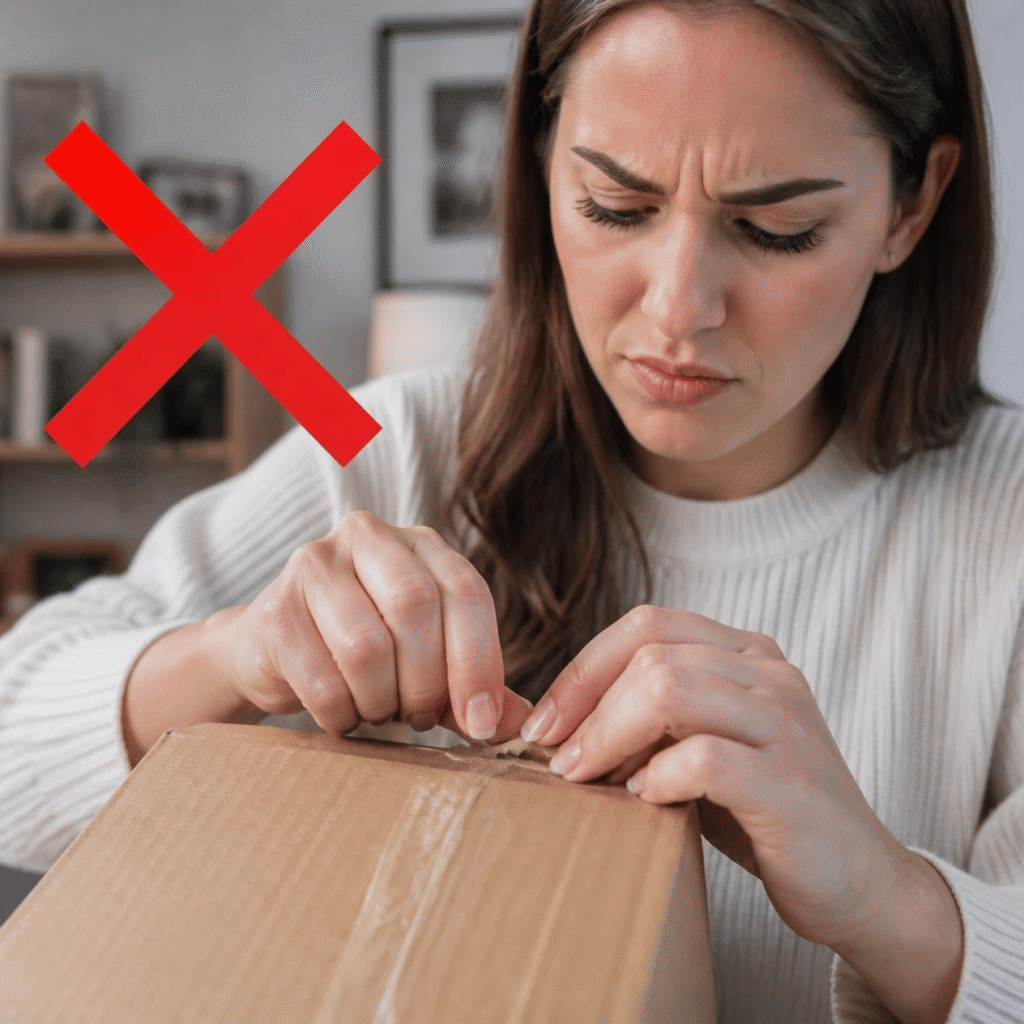
Your nails may be convenient for opening packages, scratching labels, lifting stickers, or opening cans, but these little habits can lead to cracks and breaks.
Instead, use the appropriate tool whenever possible.
Think of your nails as part of your skin-care routine rather than tools.
This simple change can prevent unnecessary stress on already weak nails.
7. Be Gentle With Your Cuticles
Cuticles have an important protective role around the nail.
Instead of aggressively cutting, pushing, or picking at them, focus on keeping the area moisturized.
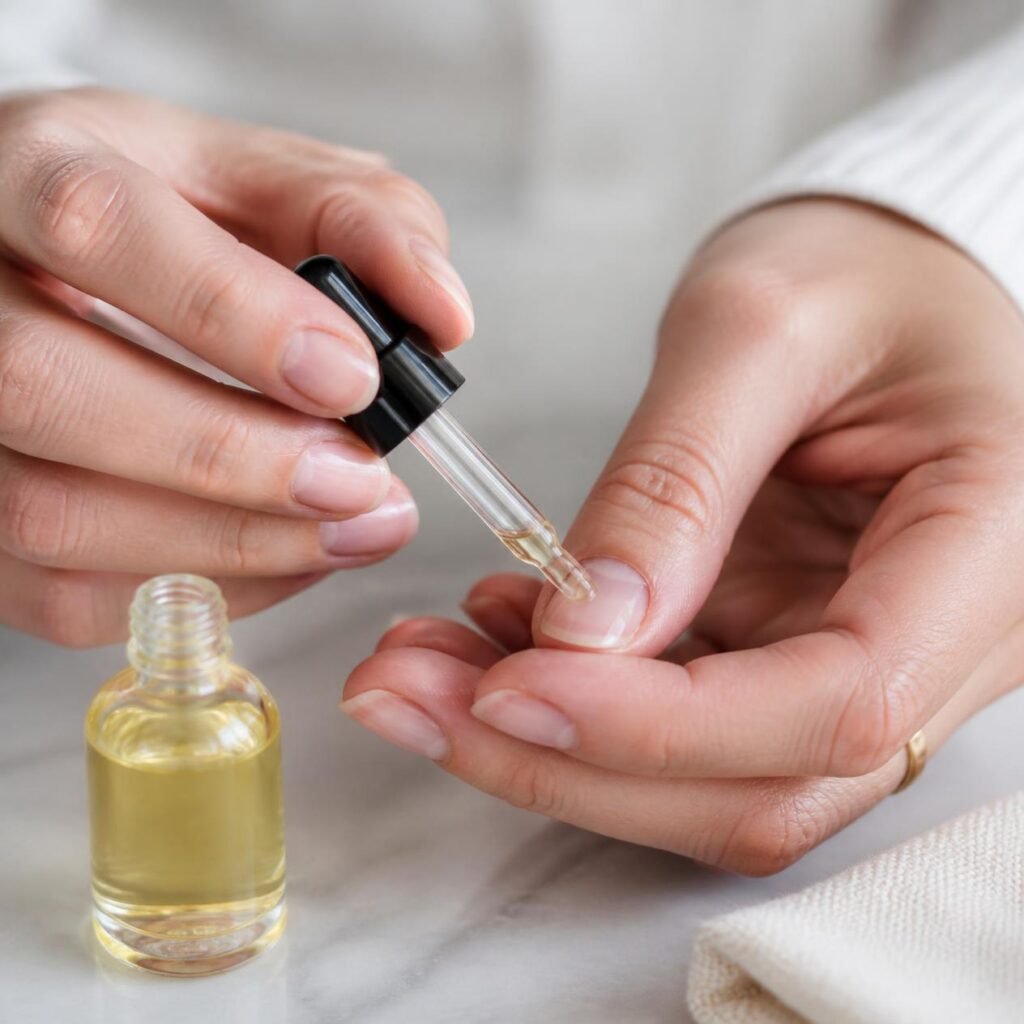
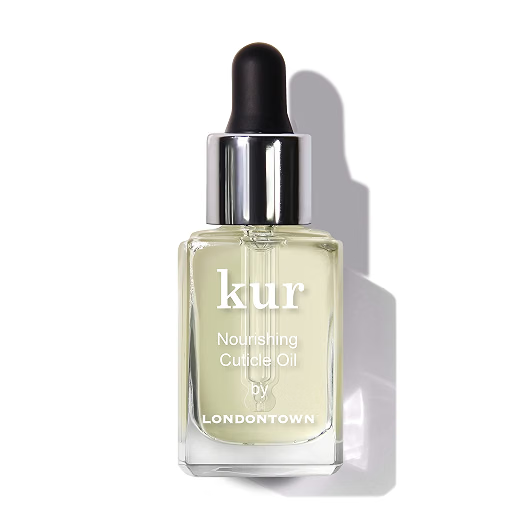
If your cuticles look dry, apply cuticle oil or a rich moisturizer and gently massage it into the surrounding skin.
The American Academy of Dermatology advises against allowing a manicurist to push or cut the cuticle because this can contribute to inflammation and infection.
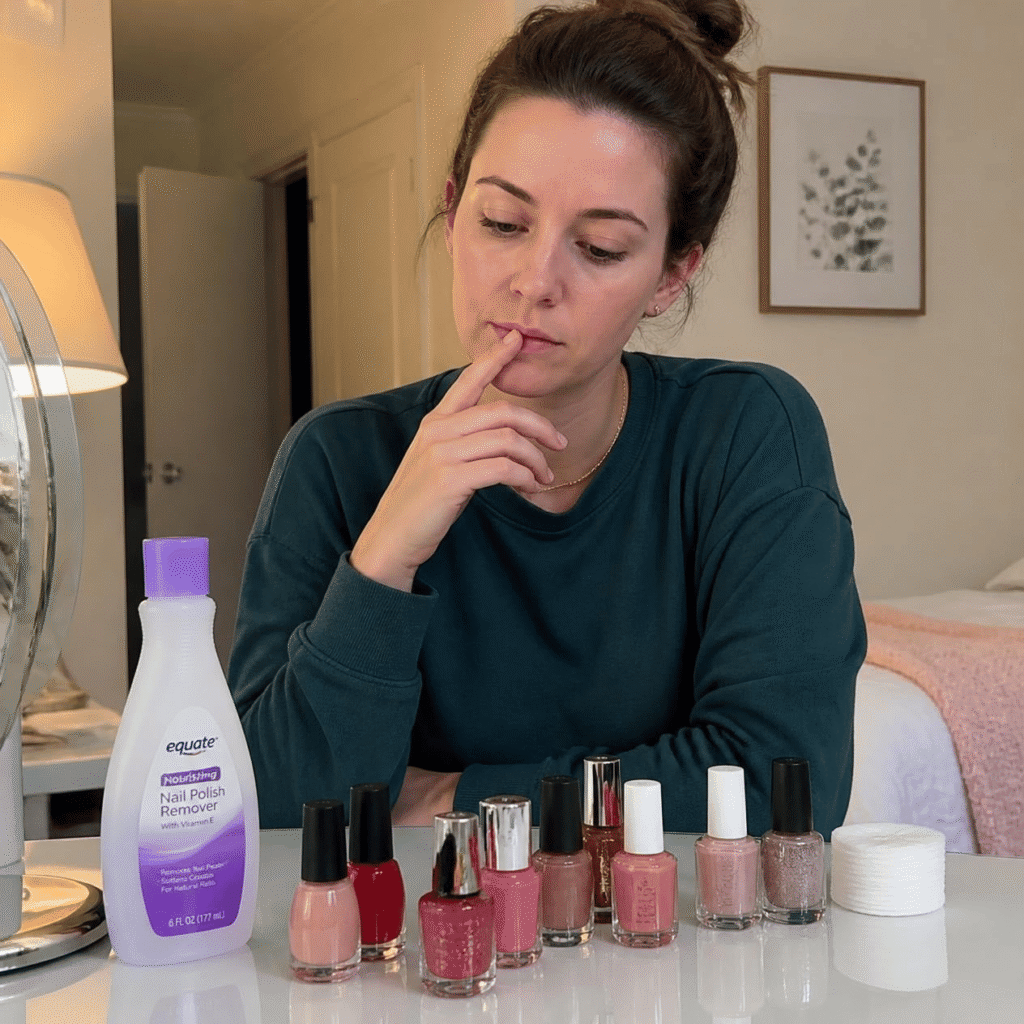
If you frequently change your nail polish, your removal routine matters.
Avoid picking or scraping polish from your nails. If you’re removing gel polish, follow a proper removal process rather than peeling it away.
The American Academy of Dermatology recommends limiting acetone exposure during gel removal and taking breaks between gel manicures.
After removing polish, give your nails some moisture with hand cream or cuticle oil.
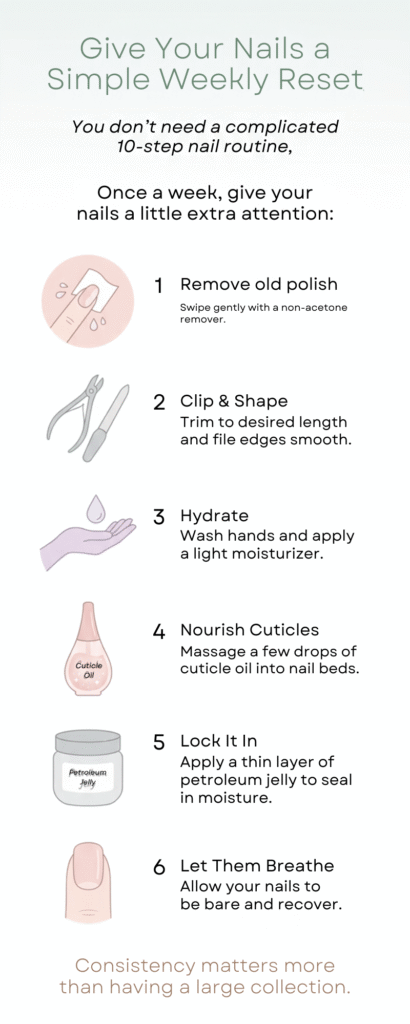
9. Give Your Nails a Simple Weekly Reset
You don’t need a complicated 10-step nail routine.
Once a week, give your nails a little extra attention:
Remove old polish gently.
Trim or file rough edges.
Apply moisturizer to your hands.
Massage cuticle oil into the nail area.
Apply a thin layer of petroleum jelly before bed if your nails are very dry.
Leave your natural nails polish-free when they need a break.
Consistency matters more than having a large collection of nail products.
How Long Does It Take to Strengthen Brittle Nails?
Don’t expect your nails to transform overnight.
Nails grow slowly, so improving their appearance takes patience. If the problem is mainly related to dryness, breakage, or everyday nail-care habits, consistent protection and moisturizing may help over time.
The key is to protect the new nail growth while allowing damaged portions to grow out.
Instead of looking for an overnight fix, focus on a simple routine you can actually maintain.
Can Diet Affect Nail Health?
Your nails need adequate nutrition to grow normally. A balanced Want to Learn Professional Nail Techniques?
However, don’t automatically assume that brittle nails mean you need a supplement.
Brittle nails can have many causes, and certain nail changes can sometimes be associated with underlying conditions or nutritional deficiencies. Cleveland Clinic notes that fragile nails can sometimes occur alongside deficiencies or medical conditions.
If your nails remain unusually weak despite good nail care, it’s worth discussing the problem with a healthcare professional rather than starting high-dose supplements on your own.
What Not to Do If You Have Brittle Nails
When you’re trying to strengthen weak nails, avoid habits that create more damage.
Try not to:
Peel off gel polish
Bite your nails
Use nails to open packages
Aggressively cut your cuticles
Keep severely damaged nails very long
Repeatedly apply artificial nails without giving your natural nails a break
Ignore persistent changes in nail color, shape, or texture
Simple nail care is usually more helpful than constantly adding new treatments.
Want to Learn Professional Nail Techniques?
If you’re a nail technician or you’re serious about improving your manicure skills, learning the right techniques can make a big difference.
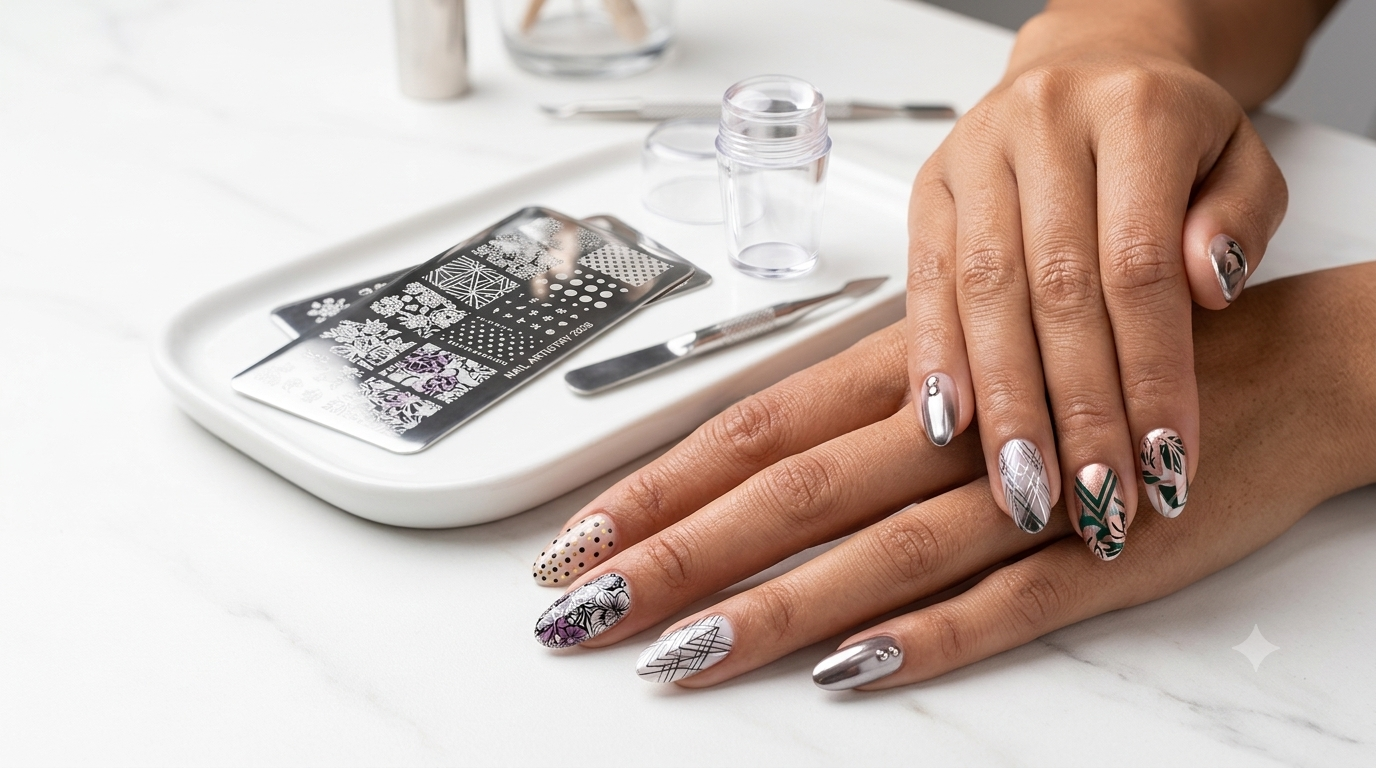
VEL Academy offers online Russian manicure training covering areas such as nail filing, problem nails, pedicure, coating, and nail stamping. The courses are demonstrated on real clients and are designed for self-paced learning.
Affiliate disclosure: This post contains affiliate links. If you purchase through my link, I may earn a commission at no additional cost to you.
When Should You See a Dermatologist?
Most everyday nail breakage isn’t an emergency. However, persistent or unusual nail changes shouldn’t simply be treated with home remedies.
Consider talking with a dermatologist if you notice:
A nail becoming detached from the nail bed
Significant redness, swelling, or pain
Persistent yellow or green discoloration
Major changes in nail thickness
Deep grooves or unusual ridges
A new dark streak
Nail changes that continue despite improving your nail-care routine
The American Academy of Dermatology recommends having unusual nail changes evaluated because some changes can be associated with infections, injuries, or other health conditions.
Final Thoughts: Give Your Brittle Nails a Break
You don’t need an expensive nail-care routine to start taking better care of weak nails.
Focus on the basics: moisturize regularly, protect your hands from cleaning products, keep damaged nails at a manageable length, avoid picking and peeling, and take breaks from gel manicures when your nails need one.
If your nails are simply dry and breaking, these small habits can make your everyday nail routine much gentler.
And remember, healthy-looking nails are a long-term goal—not something you have to achieve overnight.
Want to Learn Professional Nail Techniques?
If you’re a nail technician, aspiring nail professional, or simply want to take your manicure skills further, professional education can help you understand nail preparation, filing, problem nails, and other advanced techniques.
VEL Academy offers online Russian manicure education, including a dedicated Problem Nails Masterclass and a complete manicure and pedicure training bundle.
Disclosure: This section contains an affiliate link. If you purchase through my link, I may earn a commission at no additional cost to you.
Frequently Asked Questions
What is the fastest way to strengthen brittle nails?
There isn’t an instant fix for brittle nails. Start by moisturizing your nails and cuticles regularly, protecting your hands during cleaning, keeping weak nails shorter, and avoiding habits that cause breakage.
Is petroleum jelly good for brittle nails?
Petroleum jelly can help moisturize and protect dry nails and cuticles. The American Academy of Dermatology recommends moisturizing nails and cuticles with products such as petroleum jelly between manicures.
Can gel manicures make nails brittle?
Yes. According to the American Academy of Dermatology, gel manicures can contribute to nail brittleness, peeling, and cracking, particularly with repeated use.
Should I cut my nails short if they keep breaking?
Keeping weak nails at a shorter, manageable length can reduce catching and breaking while damaged portions grow out.
How often should I moisturize brittle nails?
You can moisturize your hands, nails, and cuticles several times throughout the day, particularly after washing your hands. A richer moisturizing routine before bed can also be helpful.
Why are my nails suddenly brittle?
Brittle nails can have several possible causes, including dryness, frequent water exposure, cosmetic nail treatments, aging, or other underlying factors. If the change is sudden, persistent, or accompanied by other unusual nail changes, consider speaking with a healthcare professional.
Ready to Take Your Nail Skills Further?
If you’re interested in learning professional Russian manicure techniques and working with different nail types, check out VEL Academy’s online training.
Medical disclaimer: This article is for general educational purposes and isn’t a substitute for personalized medical advice. If you have persistent, painful, or unusual nail changes, consult a qualified healthcare professional or board-certified dermatologist.