Flexibility and Strength: 7 Simple Ways to Stay Strong & Mobile
shankar.bhu123@gmail.com
Table of Contents
Flexibility and strength work together to help you move comfortably, perform everyday activities, and maintain an active lifestyle. While strength training helps your muscles produce and control force, flexibility allows your joints and muscles to move through a comfortable range of motion.
You don’t necessarily need long gym sessions to work on both. Simple stretching, mobility exercises, and strength movements can become part of a realistic weekly routine.
Here are 7 simple ways to build flexibility and strength while supporting better everyday movement.
1. Start With Daily Stretching
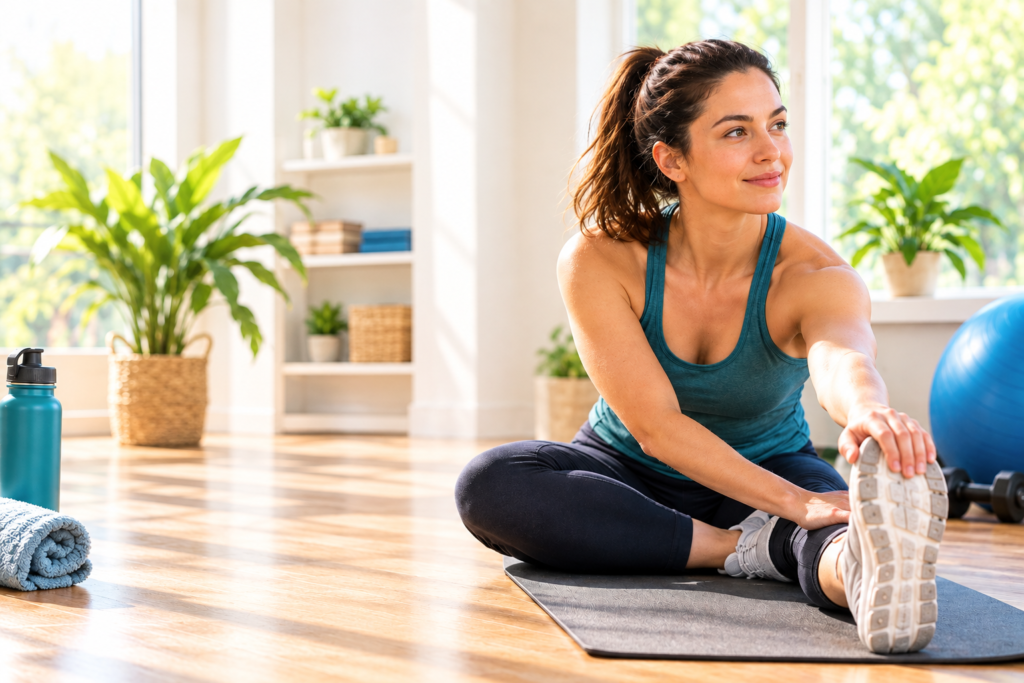
A consistent stretching routine is a simple way to work on flexibility.
You can spend just a few minutes stretching major areas of the body, including your shoulders, hips, legs, and back. Gentle stretches can be especially easy to include after a walk or workout when your body is already moving.
Try simple movements such as:
Seated hamstring stretches
Standing calf stretches
Gentle shoulder stretches
Hip flexor stretches
Chest-opening stretches
Move slowly and avoid forcing a stretch. The goal is comfortable movement rather than trying to reach a particular position.
A short daily stretching routine can be easier to maintain than an occasional long session.
2. Add Mobility Exercises to Your Routine
Flexibility and mobility are related, but they are not exactly the same.
Flexibility generally refers to how much a muscle can lengthen, while mobility involves your ability to actively move a joint through its available range of motion with control.
Simple mobility exercises can include:
Shoulder circles
Hip circles
Ankle movements
Cat-cow movements
Controlled torso rotations
Bodyweight squats
You can use a few mobility movements as a warm-up before strength training or as a short movement break during the day.
If you spend several hours sitting, getting up periodically and moving your hips, shoulders, and ankles can also help break up long periods of inactivity.
3. Begin With Simple Strength Training
Strength training doesn’t have to mean lifting very heavy weights.
If you’re new to exercise, start with manageable movements using your body weight or light resistance. Examples include:
Bodyweight squats
Glute bridges
Wall push-ups
Step-ups
Resistance-band rows
Light dumbbell exercises
These movements can help you practice basic patterns while gradually building strength.
If you’re completely new to strength training, focus first on learning proper movement and maintaining good control rather than increasing weight quickly.
A simple strength training for beginners routine performed consistently can be more useful than an overly complicated program that is difficult to maintain.
4. Give Your Core Some Attention
Your core includes muscles around your abdomen, back, hips, and pelvis that contribute to stability during movement.
You don’t need dozens of abdominal exercises. A few controlled movements can be enough to add core work to your routine.
Beginner-friendly options include:
Bird dogs
Dead bugs
Modified planks
Glute bridges
Slow bodyweight movements
Focus on controlled breathing and steady movement rather than rushing through repetitions.
Core exercises can also fit naturally into a broader routine that includes flexibility, strength, balance, and mobility.
5. Practice Functional Movements
Functional fitness focuses on movements that resemble activities you perform in everyday life.
Think about movements such as:
Sitting down and standing up
Bending to pick something up
Carrying groceries
Climbing stairs
Reaching overhead
Getting up from the floor
Exercises such as squats, step-ups, rows, carries, and controlled lunges can help you practice these movement patterns.
This is one reason functional strength can be useful for people who want their workouts to support everyday activity rather than focusing only on appearance or gym performance.
Start with movements that feel manageable and gradually increase the challenge as your experience improves.
6. Create a Balanced Weekly Movement Routine
You don’t have to train every part of your body every day.
Instead, create a weekly routine that includes different types of movement.
For example:
Monday: Strength training + gentle stretching Tuesday: Walking + mobility exercises Wednesday: Strength training + stretching Thursday: Light activity or recovery day Friday: Strength training + mobility Saturday: Walking, yoga, or another enjoyable activity Sunday: Gentle stretching and recovery
This is only an example. Your schedule can be adjusted based on your current fitness level, available time, and preferred activities.
The most important part is creating a routine that you can realistically continue.
Disclosure: This is an affiliate link. If you purchase through the link, we may earn a commission at no additional cost to you.
7. Stay Consistent and Progress Gradually
One of the biggest mistakes beginners can make is trying to do too much too quickly.
Improving flexibility and strength takes consistency. You don’t need to completely change your lifestyle overnight.
Instead, start with small habits:
Stretch for 5–10 minutes
Take regular movement breaks
Walk more throughout the week
Add two or three strength sessions
Practice mobility exercises
Gradually increase resistance or repetitions
As your routine becomes more comfortable, you can slowly increase the duration, resistance, or difficulty of your exercises.
Consistency matters more than creating a perfect workout plan that you cannot maintain.
Flexibility and Strength Work Better Together
Strength and flexibility are sometimes treated as completely separate parts of fitness, but a balanced routine can include both.
Strength exercises challenge your muscles, while stretching and mobility work can help you practice comfortable movement. Adding walking, balance exercises, and functional movements can make your overall routine more well-rounded.
For example, a simple workout might look like this:
Warm-up: 5 minutes of gentle mobility Strength: Squats, rows, and glute bridges Core: Bird dogs or modified planks Cool-down: Gentle stretching
The exact exercises and intensity should depend on your experience and individual needs.
Simple Tips for Better Results
If you’re working on flexibility and strength, keep these habits in mind:
Warm Up Before More Intense Exercise
A few minutes of gentle movement can help you transition into your workout.
Don’t Force Stretching
Stretch within a comfortable range. Avoid bouncing or aggressively pushing into a stretch.
Focus on Form
Good technique is more important than using heavier weights or completing more repetitions.
Give Your Body Time to Adapt
Progress gradually rather than increasing workout intensity dramatically from one session to the next.
Make Movement Enjoyable
Walking, yoga, Pilates, resistance training, dancing, and recreational activities can all contribute to an active lifestyle.
A Simple 10-Minute Movement Routine
If you have limited time, try creating a short routine:
2 minutes: Gentle shoulder and hip mobility 2 minutes: Bodyweight squats and glute bridges 2 minutes: Wall push-ups or resistance-band rows 2 minutes: Bird dogs or another gentle core movement 2 minutes: Comfortable stretching
This short routine isn’t intended to replace a complete fitness program. Instead, it can be an easy way to add more movement to a busy day.
An Optional Resource for Stretching and Strength
If you’re looking for a more structured approach, you may also want to explore Stretch and Strengthen – Flexibility for Longevity, a downloadable resource focused on flexibility, strength, mobility, and movement.
It may be useful for readers who prefer following a guided plan rather than creating every workout themselves.
Disclosure: This is an affiliate link. If you purchase through the link, we may earn a commission at no additional cost to you.
Final Thoughts
Building flexibility and strength doesn’t require an extreme workout routine.
Start with simple stretching, mobility exercises, beginner-friendly strength movements, and functional activities. Then build your routine gradually as you become more comfortable.
The goal isn’t to do everything at once. It’s to create sustainable movement habits that fit your lifestyle.
Even small, consistent steps can help you stay active and make movement a regular part of your week.
Important Note
This article is for general educational purposes and is not medical advice. Exercise needs vary from person to person. If you have an injury, medical condition, persistent pain, or concerns about starting a new exercise program, consider speaking with a qualified healthcare professional before beginning.